
SurveySparrow and SurveyMonkey are two of the most popular online survey tools right now. To help you decide the best one for your needs, here’s a feature-by-feature breakdown of SurveySparrow vs SurveyMonkey.
- SurveyMonkey vs SurveySparrow: At a glance
- SurveyMonkey: An Overview
- SurveySparrow: An Overview
- SurveySparrow vs SurveyMonkey: A 12-Point Comparison
SurveySparrow and SurveyMonkey are both online survey platforms, and both cover the basics well: templates, survey logic, reporting, and integrations. The differences show up in how surveys look to respondents, how much AI does for you, and how each tool supports customer experience programs.
SurveyMonkey uses a traditional form layout and is widely known, which makes it easy to adopt across a company. SurveySparrow uses a conversational, chat-like format that shows one question at a time, and adds tools for acting on feedback, such as AI follow-up questions and ticketing.
This guide compares both tools feature by feature, so you can see which one fits your team.
SurveySparrow vs SurveyMonkey: At a glance
| SurveySparrow | SurveyMonkey | |
|---|---|---|
| Survey format | Conversational (one question at a time) and classic forms | Classic forms, with a one-question-at-a-time option |
| Free plan | 3 active surveys, 10 questions per survey, 75 responses per quarter, and 2 free Echo Agents | 10 questions per survey, 40 responses per survey, other responses hit a paywall. |
| Paid plans from | $19/month, billed annually | $30/user/month, 3-user minimum (for the Team Advantage plan) |
| AI survey creation | Yes, AI survey builder | Yes, Build with AI |
| AI follow-up questions | Yes, With Echo AI Agent | No |
| AI analysis | CogniVue themes, sentiment, and key drivers | Analyze with AI, thematic and sentiment analysis |
| CX metrics | NPS, CSAT, CES with closed-loop ticketing | NPS, CSAT, CES |
| Reputation management | Yes, built-in | No dedicated feature [Verify] |
| Languages | 130 | 57 |
| Security | SOC 2, ISO 27001, HIPAA on Enterprise plan, and GDPR support | SOC 2, ISO 27001, HIPAA on select plans, GDPR |
| Best for | CX teams that want higher response rates and to act on feedback | Teams that want an industry-recognized tool |
SurveyMonkey: Overview
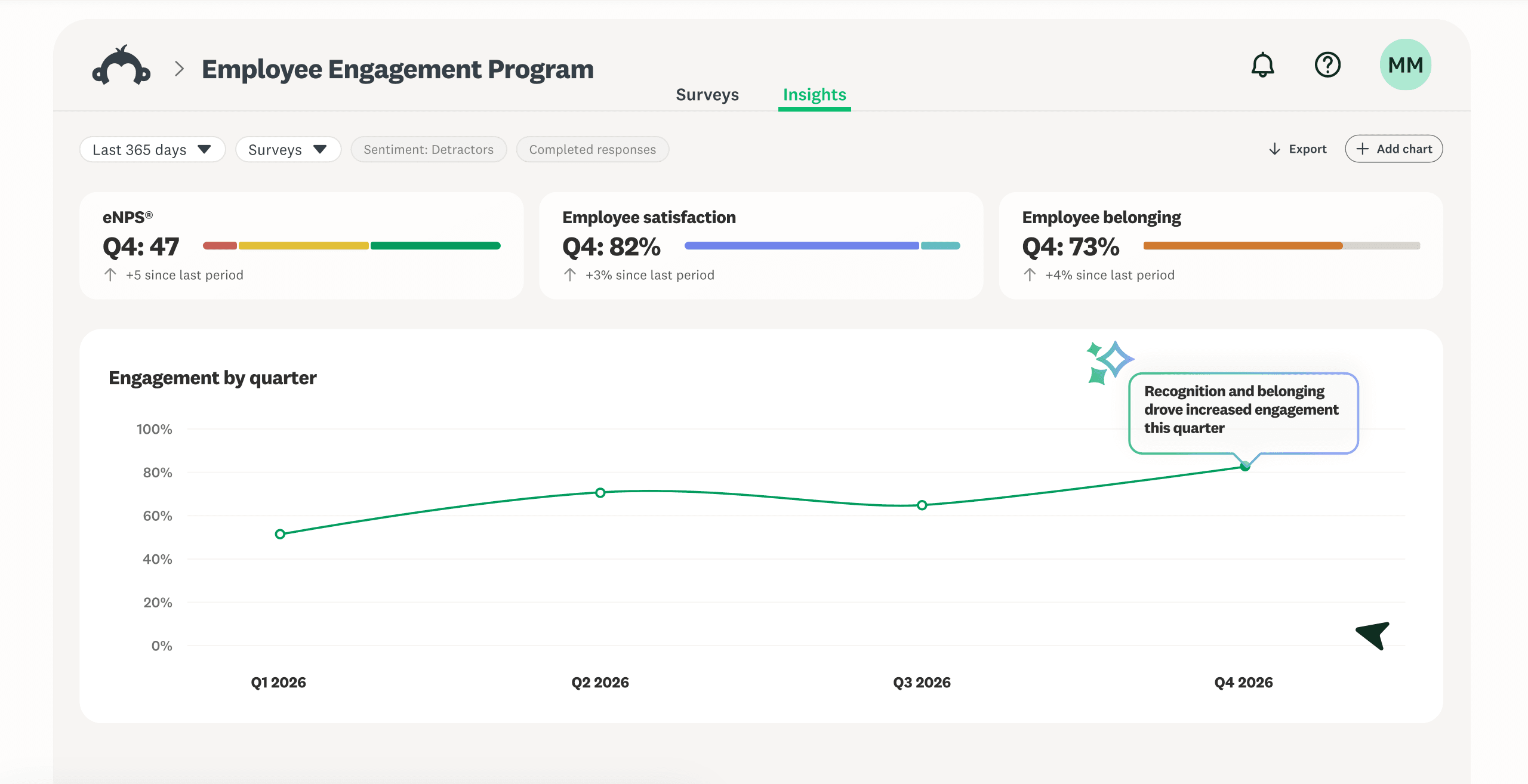
Momentive’s SurveyMonkey is one of the most popular survey tools in the market, and has more than 60 million users across the world.
Even though there are several players in the market these days, SurveyMonkey remains a reliable tool. For instance, decision-making is easier thanks to its sophisticated features and functionalities.
SurveyMonkey offers a large template library, a question bank, AI tools for building and analyzing surveys, and team features such as shared asset libraries and admin controls on higher plans.
SurveyMonkey’s surveys prioritize mobile usage, allowing you to refine your responses and achieve the results you want. In addition, the platform seamlessly integrates with several applications such as Intercom, Slack, Mailchimp, Salesforce and Zapier, enabling effective cross-channel collaboration.
SurveySparrow: Overview
SurveySparrow is a survey and experience management platform known for conversational surveys. Its chat-like format shows one question at a time, which makes longer surveys feel shorter on mobile.
Moreover, SurveySparrow makes it easy to maintain your brand voice while building credibility with your survey participants. A no-code survey builder with a drag-and-drop interface makes it easy to create surveys – even for those with no technical experience.
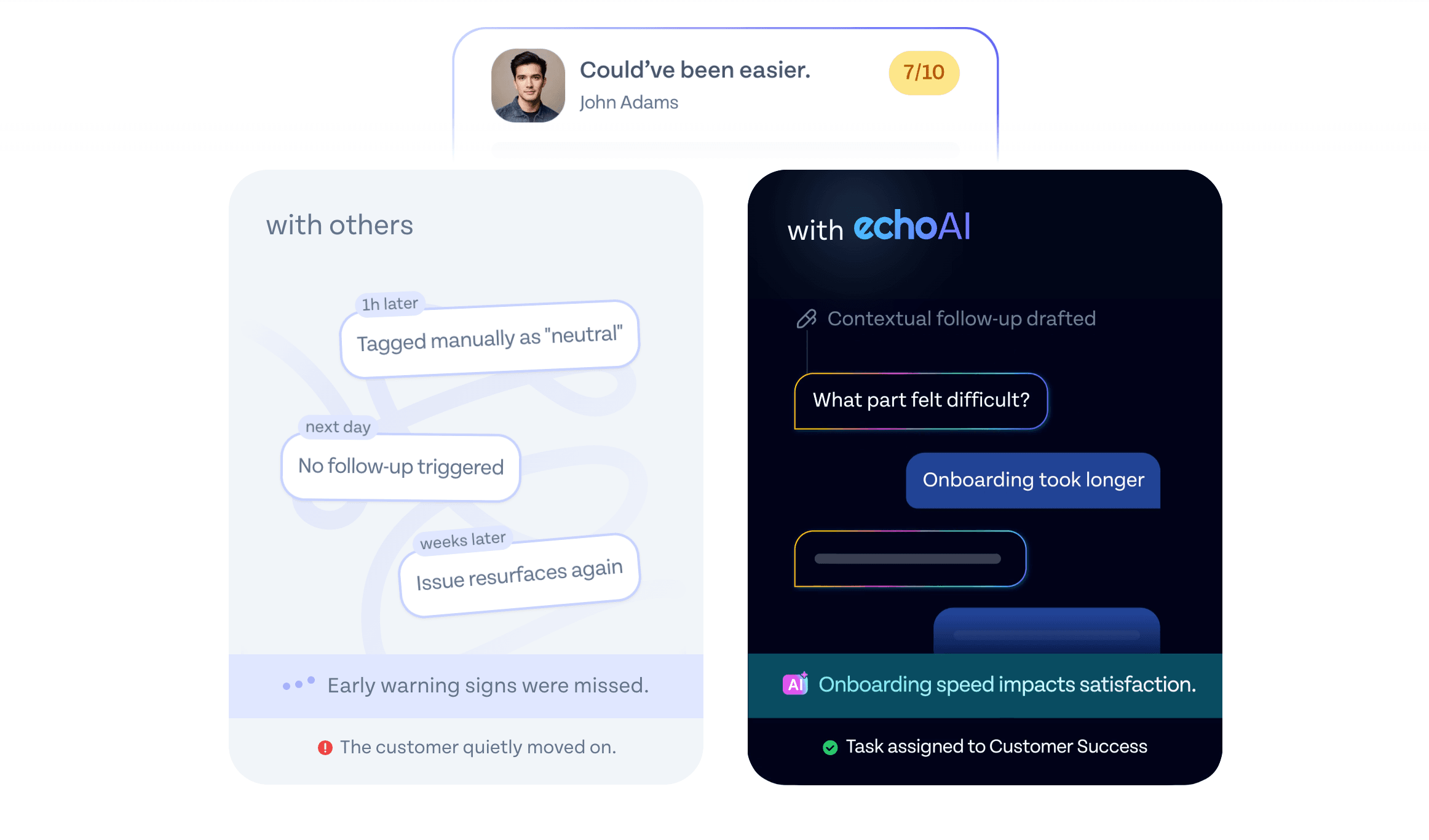
Beyond surveys, SurveySparrow includes tools for acting on feedback. Echo, SurveySparrow's conversational AI agent, asks a follow-up question after each answer, so a score arrives with the reason behind it. CogniVue analyzes open-ended responses, and ticketing turns negative feedback into tasks with owners and deadlines.
SurveySparrow vs. SurveyMonkey: A 12-Point Comparison
- Survey format & respondent experience
- Ease of survey creation
- AI features
- Survey logic
- Multi-lingual surveys
- Dashboards and reporting
- CX metrics and closing the loop
- Contact management
- Integrations
- Survey logic
- Data security
- Pricing
1. Survey format and respondent experience
SurveyMonkey
Surveys use a classic form layout, with questions shown on one page or across several pages. You can also show one question at a time. The format is familiar to respondents and works well for internal and research surveys.
SurveySparrow
Surveys can run in a conversational format that works like a chat, with one question on screen at a time. You can also build classic forms. The conversational format suits customer surveys on mobile, where long forms often lead people to quit partway.
#2. Ease of survey creation
SurveyMonkey
SurveyMonkey is the perfect tool for anyone looking to quickly create organized, effective surveys. Their 400+ survey templates can aid you in measuring customer satisfaction, loyalty, demographic opinion and many more factors.
Additionally, the Compare feature lets you choose multiple answers to a single question and view them side-by-side; perfect for better analyzing participant responses. You’ll even have access to their Question Bank with hundreds of questions already available.
SurveyMonkey has streamlined the process of drafting surveys so that creating yours from scratch is virtually effortless. It’s also incredibly user friendly; their intuitive interface helps make the process as simple as possible.
SurveySparrow
SurveySparrow features an extensive library of 1000+ survey templates, and a simple but intuitive survey creation process. You can find templates suited to any kind of business. For example, let's say you run a skincare brand. You can use the following template for your skincare business, or set up own survey using AI and then adjust the visuals the way you want.


Simply put, the platform is designed to create an engaging, interactive experience for users. This allows for conversational surveys that match the look and feel of your brand across multiple platforms – from email and landing page to social media and SMS.
As with SurveyMonkey, you can choose between presenting your survey questions as a single page form or as multiple pages – one question per page.
3. AI features
SurveyMonkey
Build with AI drafts a survey from a short prompt. Analyze with AI lets you ask questions about your results in plain language, and thematic and sentiment analysis sort open-text answers. Response Quality flags low-quality answers, such as speeders.
SurveySparrow
The AI survey builder drafts a survey from a short prompt. Echo, SurveySparrow's conversational AI agent, asks a follow-up question after each answer to capture the reason behind a score. CogniVue groups open-ended responses into themes, scores sentiment, and finds key drivers.
And if you ever get stuck or need some help generating questions, SurveySparrow also has AI survey capabilities and a random question generator.
The difference: Both tools use AI to build surveys and analyze results. SurveySparrow's Echo also uses AI during the survey, asking follow-up questions based on each answer.
4. Advanced Survey Logic
SurveyMonkey
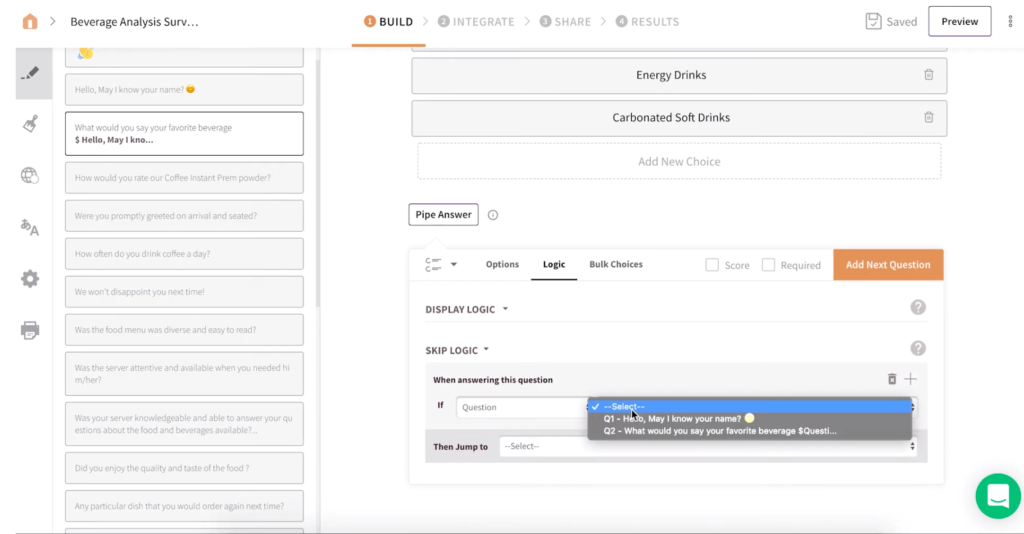
The advanced features in SurveyMonkey, such as branching, piping, randomization, and response quotas can make your surveys more effective. The reasons is that these features allow for precise control and customization of the survey-taking experience.
SurveyMonkey offers both survey question and block randomization – both easy ways to prevent survey bias. In addition, its Piping feature customizes questions according to the survey taker’s previous responses.
As a result of these advanced capabilities, you can control survey behavior for each respondent – which leads to better data.
SurveySparrow
SurveySparrow also has advanced survey logic that allows you to customize your surveys and target specific segments of respondents.
The platform offers powerful features such as skip logic, display logic, choice-level logic, piping, advanced branching, question grouping and contact management.
For example, with Contacts, you can create separate lists based on attributes. And with the Sections option in the Question Panel, you can group related questions together to target different audiences – within the same survey. These helpful tools allow for more sophisticated surveys and deeper insights from responses.
5. Multilingual surveys
SurveyMonkey
Next up in the battle between SurveySparrow vs SurveyMonkey: multi-language surveys. Enterprises and online businesses have customers from across the world. For this reason, multilingual surveys are a crucial feature.
SurveyMonkey currently supports survey creation in over 50 languages. Also, many languages have different dialects based on the region or locale. For these languages, you can click the Locale option and choose the specific dialect or locale you’d like to provide translations for.
However – except for Arabic, Persian and Hebrew – SurveyMonkey doesn’t support languages with a RTL (Right to Left) orientation.
SurveySparrow
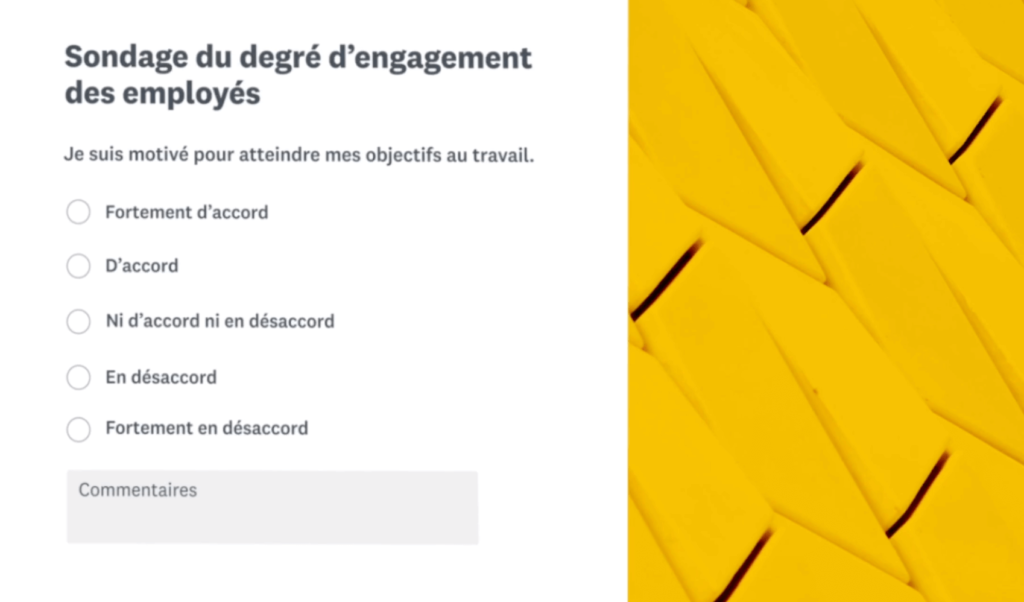
It currently supports surveys in over 130 languages that include Spanish, English, French, German, Japanese, Chinese, Arabic, etc. As stated in this help article:
Respondents will see the survey in their browser language if it’s already supported in the survey. Otherwise, the default language will be English.
For example, if the respondent’s browser language is French, and the survey has been translated/created in French, they will see it in French by default.
To create a multilingual survey in SurveySparrow, you should add translations for each question and answer choice. Then it will be displayed to respondents based on the language they prefer.
6. Dashboards and reporting
SurveyMonkey
First up in the battle between SurveySparrow vs SurveyMonkey are the dashboards.
SurveyMonkey’s survey dashboard is visually appealing and easy to personalize for different stakeholders.
There are automatic charts that can be used to gather quick insights from your survey results. The survey results can be viewed in the form of a word cloud too, making it easy for an association.
The dashboard allows you to measure your survey results against benchmarks in the industry. Moreover, it automatically refreshes as new results come in, so you don’t have to waste time on updating each and every survey report.
SurveySparrow
SurveySparrow’s reporting dashboard supports businesses in making informed decisions based on survey data. With its powerful reporting dashboard, you can quickly explore meaningful insights.
SurveySparrow’s dashboard dynamically refreshes as new responses come in, allowing you to track and analyze results in real-time. The dashboard can be completely customized to display the key highlights and metrics. Moreover, the platform has advanced filters that you can apply to your survey data to create custom reports for different stakeholders.
The data visualization options include bar charts, donut charts, pivot tables, line charts etc. – making it easy to interpret and communicate the results. Additionally, the data can be exported in a range of formats that include CSV, PDF, and Excel.
7. CX metrics and closing the loop
SurveyMonkey: NPS, CSAT, and CES templates let you measure core customer experience metrics.
SurveySparrow: NPS, CSAT, and CES surveys connect to workflows and ticketing. A low score can create a ticket, assign it to a team member, and alert them, so follow-up doesn't depend on someone checking a dashboard. SurveySparrow also includes reputation management for collecting and responding to online reviews in the same platform.
Note: Both platforms have a continuous feedback system to inform strategic processes.
8. Contact management
SurveyMonkey
SurveyMonkey’s Contacts feature helps make sure you can gather all of your contacts in one place. Moreover, you can easily pull contacts from apps like Gmail, LinkedIn and Office 365, or upload from a CSV file to keep everything organized.
In addition, you can create groups for different types of surveys, and add custom data fields for each contact – like location, job title, and more.
Plus, there are plenty of features to control survey access – password protection, limiting responses per respondent, response validation to make sure criteria are met before entry – so you can ensure that only the right people are participating.
SurveySparrow
Smart Lists by SurveySparrow are a powerful tool to manage contacts lists and share surveys, as well as letting users customize external data fields for each contact.
Plus, easily import or upload contacts in bulk from multiple external sources like Salesforce, Hubspot, Gmail, Intercom or a CSV file.
Survey Throttling enables users to decide the frequency with which contacts should receive survey invitations. Additionally, you can also track any bounced emails or unsubscribed contacts. Thanks to this flexibility, users can ensure that the right customers participate in surveys at the correct frequency.
9. Integrations
SurveyMonkey
Unifying your data is a major advantage. And with SurveyMonkey you can do it seamlessly.
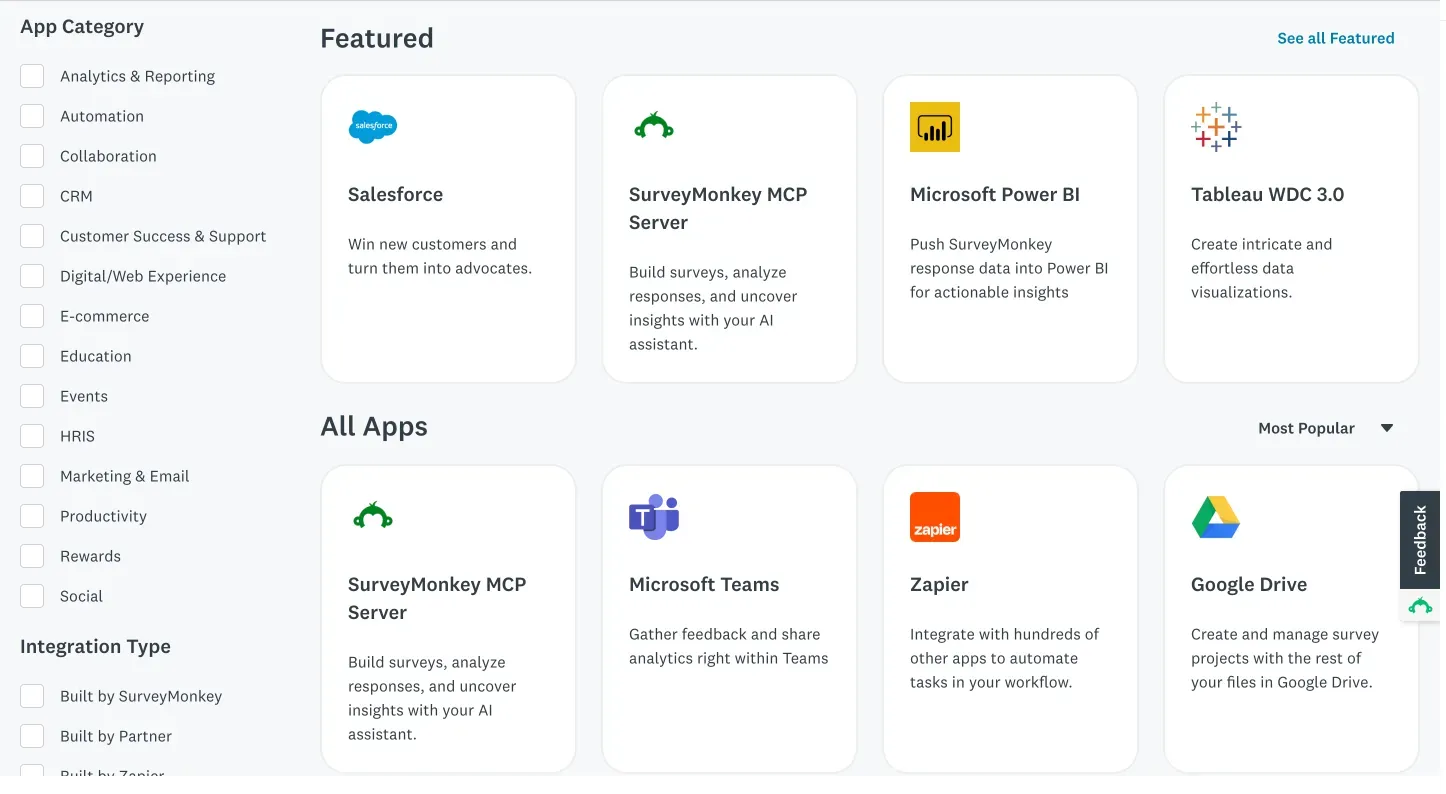
Integration options include Salesforce, Marketo, Oracle, HubSpot, Google Drive, Zapier, BoldBI and many more. Whether they’re CRM applications, productivity tools, education events or marketing platforms – you’ll find what you need to ensure your survey system runs as smoothly as possible, with minimal risk of errors or delays.
SurveySparrow
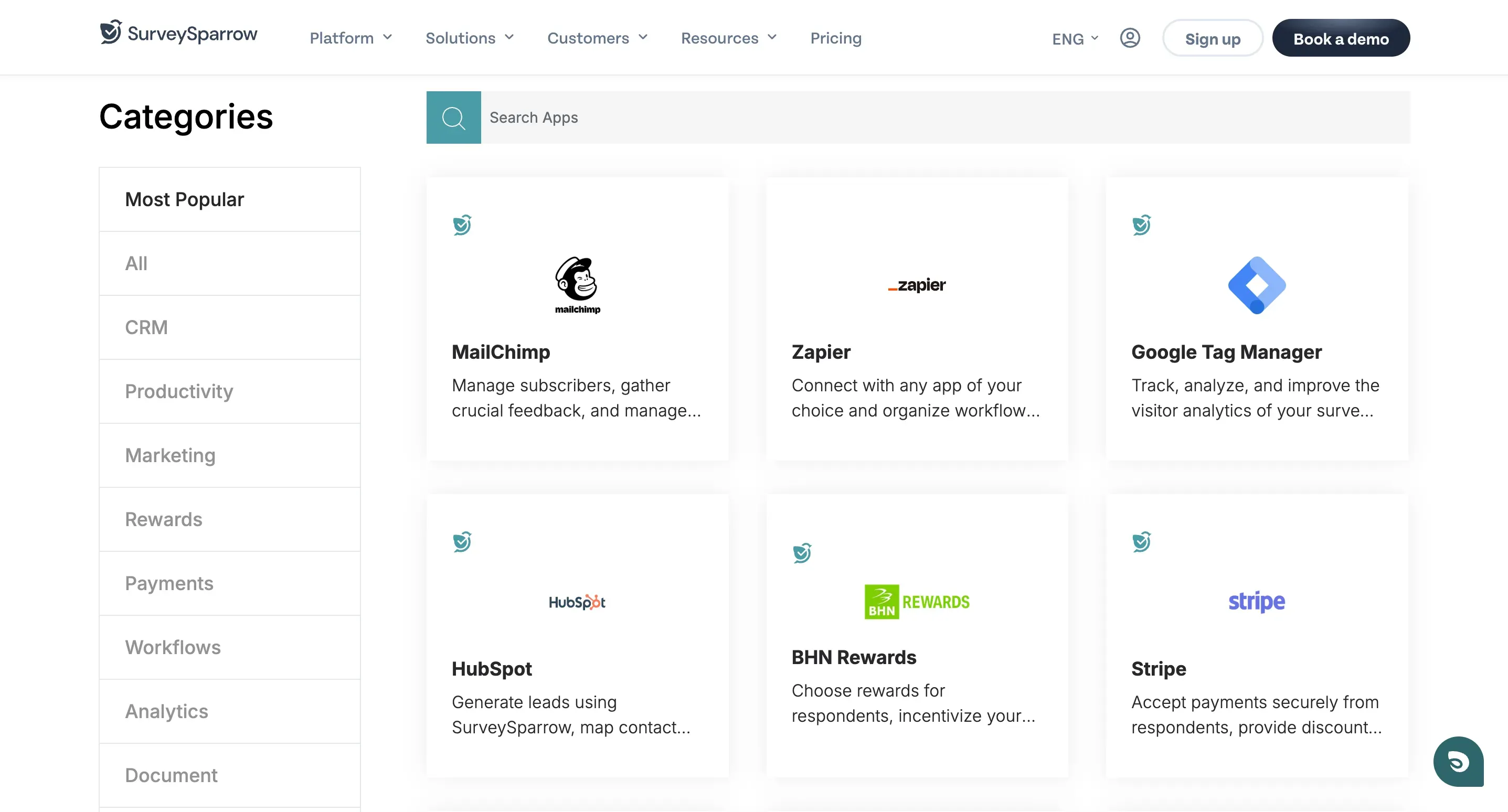
SurveySparrow provides an efficient way to connect and automate your business activities. Its API, webhooks, and integrations enable you to work with any third-party applications.
From Google to Stripe, Zendesk to Freshdesk – SurveySparrow also provides integration options with multiple apps. All you need to need to do is streamline your workflow by picking the right integration!
10. Data security
SurveyMonkey
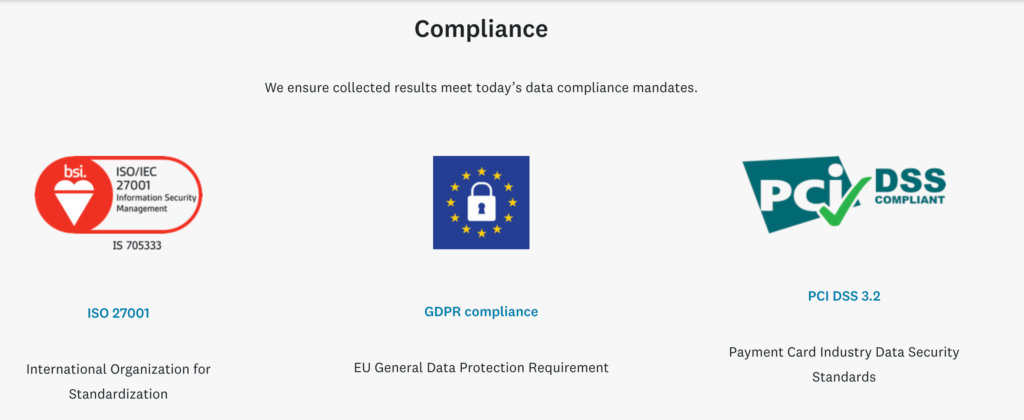
SurveyMonkey takes security very seriously. Their data systems are encrypted with SSL and AES for both transmission and storage, and safety is further enforced via SOC2 and ISO 27001 certifications on their data centers.
Additionally, SurveyMonkey is compliant with HIPAA, GDPR, and CCPA standards. By the same token, it ensures maximum protection of data assets through granular access control measures.
SurveySparrow
SurveySparrow relies on Amazon Web Services (AWS) data centers – with SSL and AES encryption to protect the data in transit and at rest.
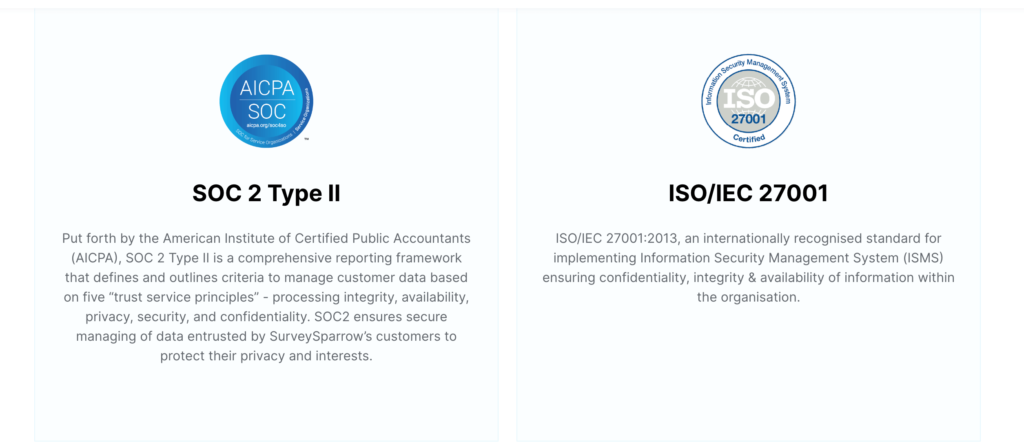
To make sure white glove security standards are being met, SurveySparrow is SOC2 and ISO/IEC 27001 certified. It is also compliant with HIPAA, GDPR, and CCPA standards.
In addition, SurveySparrow offers a password protection feature set which can be imposed either survey- or account-wide. You can even restrict user access by configuring specific roles and permissions.
11. Reputation Management
SurveyMonkey
How does SurveySparrow vas SurveyMonkey stack up when it comes to reputation management?
While you can use SurveyMonkey’s surveys for managing brand reputation, it does not offer a dedicated reputation management feature at this time.
SurveySparrow
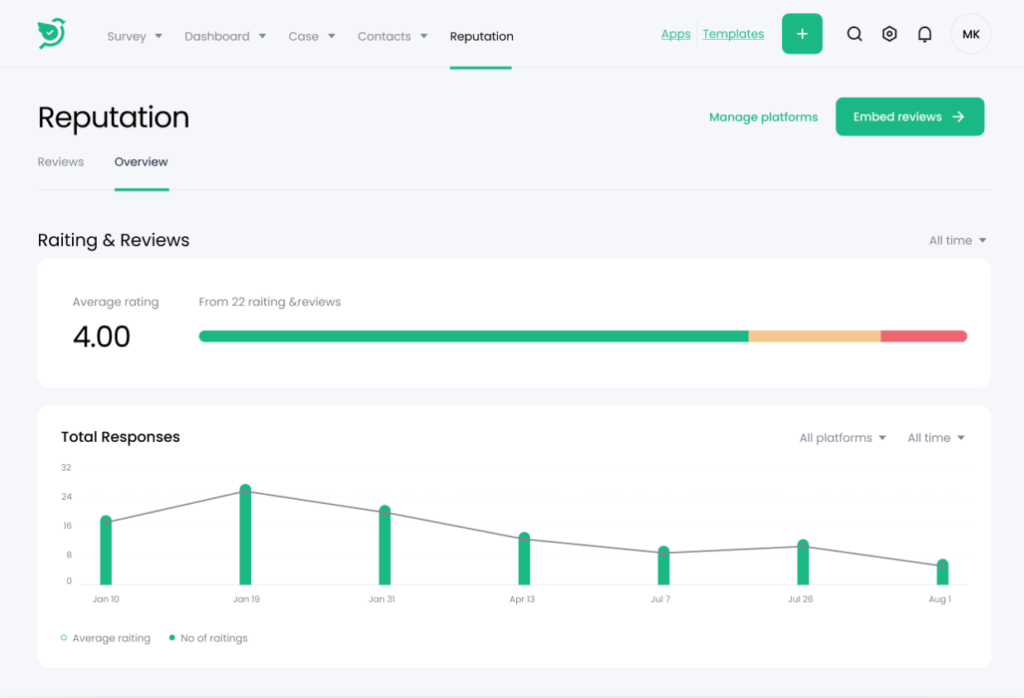
SurveySparrow’s reputation management feature is designed to help you turn your customers into loyal brand advocates. It allows you to collect, manage, and respond to customer feedback in a single dashboard.
With tailored workflows and alerts, the platform enables you to to automatically send review invites. Additionally, it utilizes email, SMS campaigns, embedded pop-ups, and QR code requests to keep customers engaged.
It also offers sentiment analysis – automatically flagging negative reviews so corrective action can be taken immediately. By using SurveySparrow’s ticketing tool, you can assign reviews to team members for follow-ups.
12. Pricing
SurveyMonkey
Here’s the final point in SurveySparrow vs SurveyMonkey: pricing.
SurveyMonkey offers three pricing plans: Basic, Team Advantage, and Team Premier. Individual user plans are also available.
The Basic plan can be accessed for free and allows users to collect up to 1,000 responses a month. For the Team Advantage plan, users are charged $30/user/month, while the Team Premier plan costs $92/user/month.
But if you’re looking for advanced features or custom requirements, you can get in touch with a SurveyMonkey representative.
SurveySparrow
SurveySparrow offers a 14-day free trial to try out the platform. Sign up below to get started.
But if you’re an enterprise looking for a custom solution, you can get in touch with us.
Wrapping Up
When comparing SurveySparrow vs SurveyMonkey as online survey tools, it is important to consider the features they offer. While many of them are similar, there may be some differences that make one tool or the other preferable – depending on the use case and organization. So consider all of the functionalities before deciding which is the best fit for your organization’s needs.
SurveyMonkey is a great tool, but it has its constraints too. So if you need to send conversational surveys or want more detailed reporting options, then SurveySparrow might be the perfect choice for you.
With in-depth analytics, personalization, powerful workflows, automation capabilities and APIs, SurveySparrow provides an intuitive platform to help you capture valuable insights from your surveys. Get in touch with our team to learn more about what we can do for you.