

About 80% of companies think they deliver a "superior" customer experience. The reality is far from the truth- only 8% of customers share this view.
This gap makes sense. While 95% of high-level management teams claim to be "customer-focused," barely 30% maintain customer feedback loops. Many organizations make assumptions about their products and services and substantially overestimate their customers' satisfaction levels.
This gap isn’t caused by a lack of data, it’s caused by how feedback is collected. Long, rigid surveys discourage honest responses, while poorly designed questions introduce bias. That’s why high-performing teams increasingly rely on short survey examples that feel conversational, contextual, and easy to complete—without sacrificing insight.
Tools like SurveySparrow are built around this principle, using chat-style surveys that reduce friction and encourage more authentic feedback compared to traditional forms.
Short survey examples play a vital role in modern business. These bite-sized questionnaires can bridge the gap between perception and reality when designed properly. Companies can get honest feedback that leads to meaningful improvements.
Survey questions must be clear, neutral, unbiased, and align with your research goals. The combination of qualitative open-ended questions and quantitative closed-ended questions can boost your survey results substantially.
Survey timing plays a key role. People typically spend 10-15 minutes on surveys, and completion rates drop sharply after 10 questions. Creating focused, quick surveys has become more essential than ever.
This piece shows you how to create short surveys that people want to complete. You'll find proven examples that generate applicable feedback. These techniques help you get answers quickly - whether you measure customer satisfaction, gather product feedback, or check website usability.
Who These Short Survey Examples Are For
These short survey examples are designed for teams that need fast, reliable feedback without overwhelming respondents. They’re especially useful for:
- Product teams validating features and usability
- Customer experience (CX) teams tracking satisfaction and loyalty
- Marketing teams testing messaging, campaigns, and website performance
- UX & research teams identifying friction points quickly
- Operations & support teams improving service quality after interactions
If your goal is to replace assumptions with real customer insight—without long surveys—these short survey examples are built for you.
What Makes a Short Survey Effective
A good short survey starts with knowing what gets respondents interested. Success doesn't depend on length - it's about purpose, clarity, and staying neutral.
Keep it focused on one goal
You need to know exactly what you want to learn before creating a survey. A single, clear objective means every question has a purpose. This helps avoid overwhelming respondents with random questions.
Studies show that having a specific goal before writing questions keeps your survey organized and focused. A clear objective lets you pick out relevant topics that directly help your research.
Survey objectives show why each question matters and help shape the research design. Your data becomes more precise and easier to analyze when you stick to one goal.
SurveySparrow's template builder helps maintain this focus. It organizes questions around your main objective, so each response adds value to your research goals.
Use simple and clear language
Simple language helps respondents give accurate answers. You write for your audience, not yourself - this is key.
Here are some best practices:
- Keep sentences short and straightforward
- Write in active voice with direct verbs
- Cover only one idea per question
- Use headings and lists where appropriate
- Choose words familiar to your audience
Research shows that small changes in wording can make a big difference in how people answer. Using technical jargon or complex terms often leads to wrong answers or people giving up on the survey.
To name just one example, "How easy is it to use our product?" works better than "How would you rate the UX of our product?". This simple change gets you more accurate responses.
Avoid leading or biased questions
Survey bias happens when methods favor certain outcomes, at any point from design to analysis. Leading questions push people toward specific answers, which ruins your results.
Questions need to stay neutral to get honest feedback. Ask "How satisfied are you with our product?" instead of "How much do you love our product?" The first option doesn't assume anything.
Also, don't combine multiple ideas in one question. Split "Is Nike the most effective and economical brand of athletic shoes?" into separate questions about effectiveness and cost.
The way you word questions changes how people respond. A Pew Research study found that 51% of respondents supported "making it legal for doctors to give terminally ill patients the means to end their lives," but only 44% agreed with "making it legal for doctors to assist terminally ill patients in committing suicide".
Your short surveys will generate better insights by focusing on one goal, using clear language, and staying neutral.
Applying these principles consistently can be challenging at scale. SurveySparrow’s conversational survey builder helps teams stay focused on a single objective, use clear and neutral wording, and remove unnecessary questions—so every short survey stays purposeful and respondent-friendly.
14-day free trial • Cancel Anytime • No Credit Card Required • No Strings Attached
Types of Short Survey Questions That Work
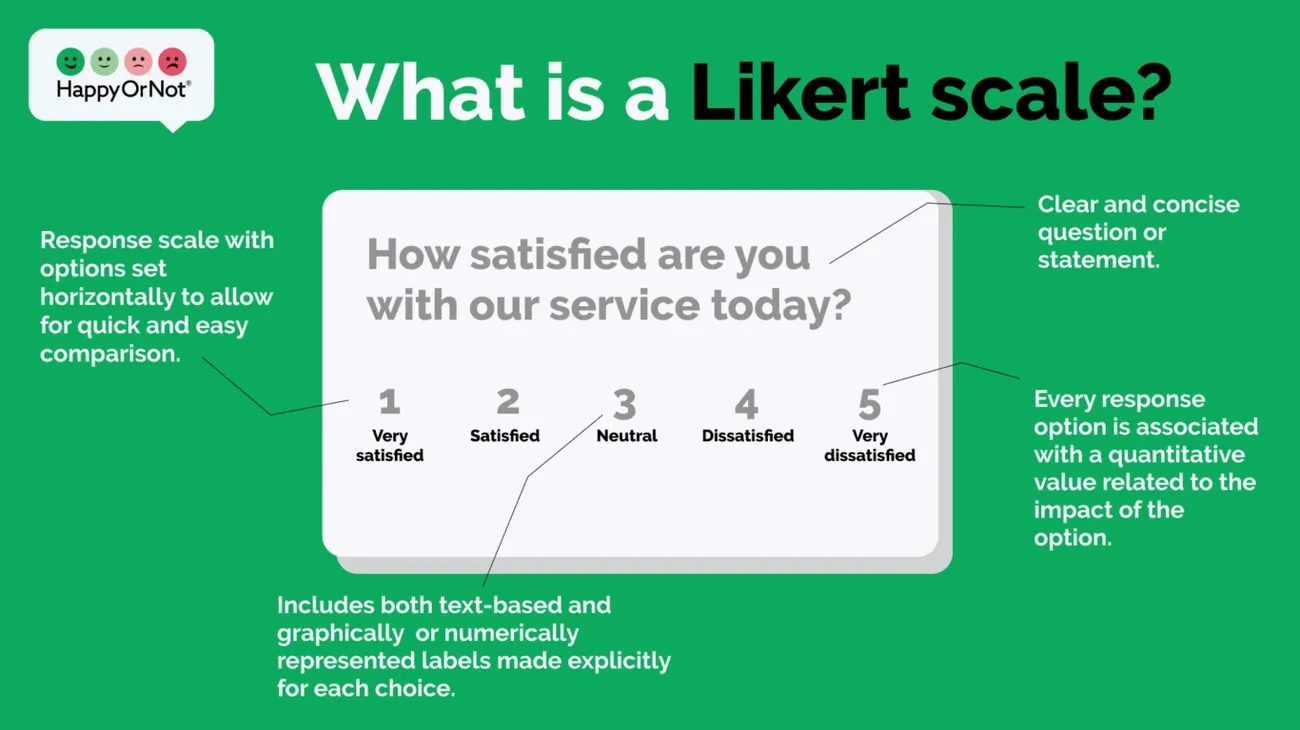
Image Source: HappyOrNot
The right question formats are vital to create short surveys that get meaningful feedback. Each question type serves a specific purpose and helps you get both detailed and precise data from your respondents.
Open-ended vs. closed-ended
The main difference between these question types comes down to how people can answer them. Open-ended questions let participants respond in their own words and give rich, qualitative data. Closed-ended questions give specific options to choose from, which creates structured, quantitative results that you can analyze more easily.
Open-ended questions work best when you need to:
- Explore topics in depth
- Uncover unexpected insights
- Learn about the "why" behind responses
- Collect testimonials or stories
But these questions take more effort to answer. Research shows surveys with many open-ended questions tend to have lower completion rates than those that mostly use closed questions.
Closed-ended questions are perfect when you need:
- Numbers you can analyze statistically
- Quick responses that keep people from abandoning the survey
- Results you can compare between respondents
- Large amounts of data processed faster
One effective approach is combining both formats dynamically. With SurveySparrow’s conditional logic, closed-ended questions can automatically trigger relevant open-ended follow-ups—keeping surveys short while still capturing the “why” behind responses.
14-day free trial • Cancel Anytime • No Credit Card Required • No Strings Attached
Likert scale and rating scale
Likert scale questions measure how much people agree using standard response options. These well-laid-out questions usually offer 5-7 choices from "Strongly Disagree" to "Strongly Agree". They're great at turning subjective opinions and attitudes into numbers.
Research shows the ideal Likert scale should have 4-7 categories. Any fewer won't capture enough detail, while more categories become too complicated.
Rating scales give you another great way to assess satisfaction, quality, or likelihood. Unlike Likert scales that focus on agreement, rating scales can measure different things using numbers (1-10) or descriptions (poor to excellent).
Both formats turn subjective answers into data you can analyze. SurveySparrow's template library has optimized rating questions for customer satisfaction, NPS, and product feedback.
Yes/No and multiple choice
Yes/No questions give you simple, straightforward answers that people find easy to complete. Their simplicity makes them perfect for:
- Screening participants
- Confirming basic facts
- Creating branching logic
- Improving completion rates
Research shows people are substantially more likely to finish surveys with simple yes/no questions because they don't have to think too hard.
Multiple choice questions give several preset options, letting people pick either one answer (radio buttons) or many (checkboxes). These flexible questions can capture priorities, behaviors, demographics, or opinions quickly.
Survey research shows matrix-style multiple choice questions put related questions in a grid, so people can answer multiple items faster. These can be tricky on mobile devices, so SurveySparrow's responsive design adapts these formats for smaller screens automatically.
Short survey description examples
A good survey description sets clear expectations and gets more responses. Your introduction should be short—just three or four sentences—but informative.
A good survey description has:
- Your survey's purpose
- How you'll use the data
- How long it takes
- Privacy details
- Contact info for questions
Here's an example: "This 3-minute survey will help us improve our customer service. Your anonymous feedback will shape our training program directly. Questions marked with an asterisk (*) are required."
SurveySparrow's templates come with proven description formats for different survey goals. These help you create introductions that encourage participation without overwhelming your respondents.
8 Short Survey Examples That Get Real Customer Feedback
Let's look at eight proven survey templates that give useful insights for different business needs. These templates serve specific purposes and help you collect feedback to make improvements.
Customer satisfaction follow-up
This survey captures how customers feel about your product, service, and company at both small and large scales. The Customer Satisfaction Score (CSAT) helps measure satisfaction by asking customers to rate their experience on a standardized scale.
Example question: "How satisfied were you with our customer service experience?" (Scale: Very satisfied to Very dissatisfied)
You should use this after service interactions to spot areas needing improvement. CSAT surveys transform personal experiences into measurable data that helps teams understand current sentiment and set future priorities.
Product feature feedback
These surveys show what works well and where your offerings fall short. Your customers' priorities, pain points, and areas needing development become clear.
Example question: "What functionality do you value the most in our product?"
The results help create accessible product roadmaps and show how well new features catch on. SurveySparrow's AI-powered sentiment analysis spots patterns in open-ended responses.
3-Question Product Feedback Survey Best for: SaaS, product teams
|
Website usability check
Users can tell you directly about their experience on your site through these surveys. Navigation issues, design improvements, and conversion roadblocks become apparent.
Example question: "How easy was it to complete your intended task on our website?"
Your bounce rates drop and engagement improves when you optimize your site's design elements. Quick action on usability concerns prevents negative reviews and lost business.
Many of these short survey examples are most effective when triggered contextually. SurveySparrow allows teams to launch surveys based on user actions—like feature usage, page visits, or checkout completion—so feedback is collected at the moment it matters most.
14-day free trial • Cancel Anytime • No Credit Card Required • No Strings Attached
Event experience rating
Attendees share their experiences through post-event surveys that shape future events. Success metrics become clear and improvement areas emerge.
Example question: "How satisfied were you with the overall event experience?"
Studies show these surveys get 20-30% response rates when sent right after the event. Attendee feedback transforms into clear direction for your next event.
Employee engagement pulse
Short pulse surveys track employee engagement over time. Teams can check in more often, see trends, and link better results to specific actions.
Example question: "How satisfied are you with the company's communication during changes?"
Smart timing matters since 90% of companies using non-stop surveys struggle to keep response rates above 50%.
Post-purchase feedback
Customers share their thoughts right after buying through these surveys. The buying experience and product satisfaction come into focus.
Example question: "How satisfied are you with your purchase today?"
Problems in the customer's journey surface quickly, letting you fix issues fast. Happy customers buy again and recommend your brand more often.
4-Question Post-Purchase Survey Best for: E-commerce, DTC brands
|
Abandoned cart reason
These surveys reveal why shoppers leave without buying. The data shows what stops people from completing their purchase.
Example question: "What stopped you from completing your purchase today?"
Shoppers often mention high prices, shipping costs, payment problems, or complex checkouts. Exit-intent pop-ups can save about 6.43% of almost-lost sales.
Net Promoter Score (NPS)
One simple question measures customer loyalty in NPS surveys. Answers create three groups: Promoters (9-10), Passives (7-8), and Detractors (0-6).
Example question: "How likely are you to recommend our product to a friend or colleague?" (Scale: 0-10)
The NPS calculation subtracts detractor percentage from promoter percentage, giving a score between -100 and +100. This number shows how strong your customer relationships are and flags those who might leave.
Short Survey Examples by Use Case
Not every survey serves the same purpose. Below are short survey examples grouped by common business scenarios, so you can quickly find what fits your needs.
- SaaS & Product Teams: Onboarding feedback, feature adoption, usability checks
- E-commerce Teams: Post-purchase feedback, abandoned cart reasons, checkout experience
- B2B Teams: Demo feedback, trial experience, customer onboarding
- Marketing Teams: Website usability, content feedback, campaign response
- HR & People Teams: Employee engagement pulses, internal communication feedback
Using the right short survey example for the right moment significantly improves response quality and completion rates.
Browse our extensive template library with over 1000+ ready-to-use surveys to get started.
How to Write Short Survey Questions That Convert
The best way to turn survey questions into high-converting touchpoints lies in smart formatting that values your respondent's time. You need to strike the right balance between keeping things simple and getting detailed responses.
Start with a simple yes/no
Yes/no questions make surveys feel effortless by reducing mental effort for respondents. These binary questions work well for people with any language skill or reading level.
In fact, people are much more likely to finish surveys that use simple yes/no questions. These questions work best when you need to:
- Get quick opinions
- Screen respondents
- Create branching logic
The best way to write yes/no questions is to start them with helping verbs like "do," "is," or "have" - this naturally leads to binary responses.
Follow up with a targeted open-ended question
After collecting your numbers, targeted open-ended questions help explain the "why" behind those responses. These questions take more effort to answer but give explanations that improve your quantitative data.
Your survey should have limited open-ended questions. The best approach places them right after closed-ended questions to dig deeper into specific answers.
Creating this kind of adaptive flow of conditional logic branching manually can be time-consuming. SurveySparrow simplifies this with branching logic, answer piping, and AI-powered question suggestions—making it easy to build short surveys that feel personalized without adding length.
14-day free trial • Cancel Anytime • No Credit Card Required • No Strings Attached
Start by creating your draft survey with question piping and custom parameters. The next step involves testing your survey with colleagues before launch. This check will give you clear, unbiased questions that work well on all devices.
The final step uses SurveySparrow's reporting module to track responses and show findings in visual form.
When and Where to Ask Short Surveys
Survey response rates and data quality depend heavily on timing and placement. The right positioning will help you gather feedback that's relevant and useful.
In-app or on-site triggers
On-site surveys excel at gathering real-time, contextual feedback. These surveys show up after specific user actions - completing onboarding, trying features, or finishing purchases. SurveySparrow's behavioral targeting lets you launch surveys based on geography, demographics, and online behavior. This approach delivers reliable insights that show current user sentiment.
SurveySparrow’s behavioral targeting enables teams to trigger short surveys based on real-time actions—such as onboarding completion, feature adoption, or exit intent—ensuring feedback is both timely and relevant.
Email follow-ups
Response rates can rise dramatically with just one follow-up email. Survey reminder emails work best when sent 42-78 hours after the original invitation. Research shows Monday brings the highest response rates, while Saturday performs poorly. SurveySparrow's automated email sequences can handle these peak-time follow-ups automatically.
Exit-intent popups
Visitors who try to leave your site trigger exit-intent surveys, which help identify why they're abandoning. These tools can recover about 6.43% of revenue that would otherwise be lost. Exit surveys on checkout and product pages help e-commerce sites learn about cart abandonment issues.
Post-interaction surveys
Quick reactions to experiences come from post-purchase or post-action surveys. Deployment should happen within 24-48 hours of an event while memories remain fresh. Customer support surveys need to go out right after chats end or tickets close. SurveySparrow's post-interaction templates make these timely touchpoints simple to implement.
Why Short Surveys Outperform Long Surveys
Short surveys consistently outperform longer ones because they respect respondent time and reduce cognitive load.
Compared to long surveys, short survey examples:
- Achieve higher completion rates
- Generate more honest responses
- Reduce survey fatigue and drop-offs
- Capture feedback closer to the actual experience
When paired with smart logic and contextual triggers—as enabled by SurveySparrow—short surveys deliver better insights with fewer questions.
Conclusion
Short surveys are powerful tools that bridge the gap between perception and reality. These short survey examples show that how concise, well-laid-out surveys can turn disconnected assumptions into applicable information. Your customers' authentic feedback comes directly through short surveys instead of guessing what they think.
The best surveys keep a laser-focus on a single goal. They should employ clear, straightforward language that respondents understand easily. Of course, avoiding biased or leading questions will give a true reflection of respondent opinions rather than confirming existing beliefs.
Your choice of question format matters by a lot. Closed-ended questions generate quantifiable data for statistical analysis. Open-ended follow-ups reveal the vital "why" behind responses. This balanced approach delivers both breadth and depth in feedback collection. Likert scales, rating questions, and binary formats create surveys that feel effortless yet provide meaningful data.
Survey effectiveness depends on timing and placement. Post-interaction surveys capture immediate reactions while exit-intent popups show why customers leave. Your survey delivery should line up with specific customer touchpoints to increase response rates and insight quality.
SurveySparrow brings these principles together through conversational surveys, smart logic, and AI-powered sentiment analysis. Instead of static forms, teams get dynamic, short surveys that respect respondent time while delivering actionable insight.
If you want your short survey examples to generate real answers—not assumptions—SurveySparrow helps you design, deploy, and analyze surveys that close the perception gap for good.
14-day free trial • Cancel Anytime • No Credit Card Required • No Strings Attached