What is feedback management?
Feedback management is the process of systematically collecting, organizing, analyzing, and acting on input from customers, employees, or users. For CX teams, it is the operational backbone that connects what customers say to what the business does — closing the gap between perception and experience.
What is customer feedback management?
Customer feedback management helps businesses collect, analyze and act on customer feedback to create better online experiences. This approach lets organizations gather insights from different channels. They can understand what customers think and make improvements based on real experiences. The process turns basic feedback into valuable insights that shape business decisions.
A good feedback management system needs a clear framework. Most organizations use the ACAF (ask, categorize, act, follow up) feedback loop. The process starts by asking for customer feedback. Teams then sort this information into categories and make needed changes. They check back with customers to make sure their concerns were fixed. This system ensures customer opinions shape business strategies.
Why feedback management matters?
A structured feedback management process helps businesses in three specific ways.
- It gives teams the data to make retention decisions before customers churn. Organizations with formal feedback programs can identify churn signals earlier and resolve them before they become exit decisions.
- Feedback management provides engineering and product teams with evidence to base their product and service decisions on, instead of internal assumptions. Features built on aggregated customer input are more likely to solve the problems customers are facing.
- It improves satisfaction scores over time by demonstrating to customers that their input influences what the business does — which is one of the strongest drivers of loyalty available.
The feedback management process
Feedback management process consists of four stages.
- Collection
- Organization
- Analysis
- Action - closing the loop
Each stage depends on the one before it, and a gap in any one of them undermines the value of the others.
1. Collection
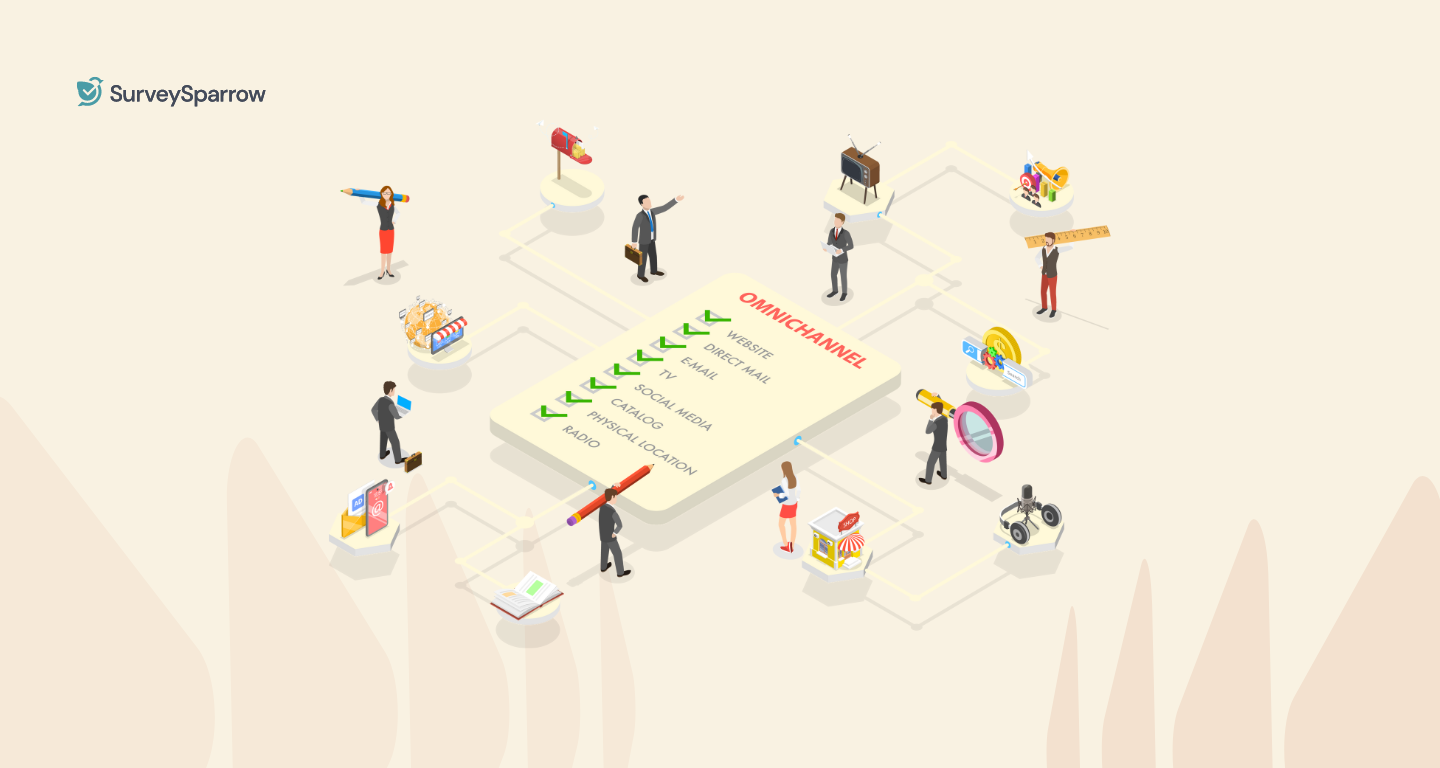
An effective collection strategy does not rely on collecting feedback from a single channel. It captures input from wherever customers are most likely to share it, at any moment in their journey.
For example, feedback can reach businesses through multiple channels simultaneously, such as surveys sent after a purchase or support interaction, reviews posted publicly on G2 or Google, support tickets submitted through a helpdesk, social media comments, in-app signals, and conversation transcripts.
The quality of the collection stage determines the quality of everything downstream. Poorly timed surveys, biased questions, and single-channel collection all produce data that is incomplete at best and misleading at worst. Mapping the customer journey is a good strategy to avoid incomplete data.
2. Organizing and centralization
Every business nowadays receives feedback from multiple sources. Organizing that feedback is key. Without it, the data remains fragmented.
Centralization is the step that makes the rest of the process possible.
Organizing feedback is the process of bringing it into a single system, tagging it by source, category, and sentiment, and structuring it in a way that allows patterns to surface across channels.
For example, a complaint about onboarding could appear either in a survey, a support ticket, or in a review. Without centralization, these signals will appear as three separate data points.
3. Analysis
This is a key step of the feedback process where data is turned into actionable intelligence using either software powered by business intelligence tools or AI assistants.
For example, AI can group feedback in customer service operations by themes and priority. With this grouping mechanism that many feedback management platforms provide, high-volume systems can be managed and scaled as well.
Feedback analyses gives business a prioritized view of what to address first.
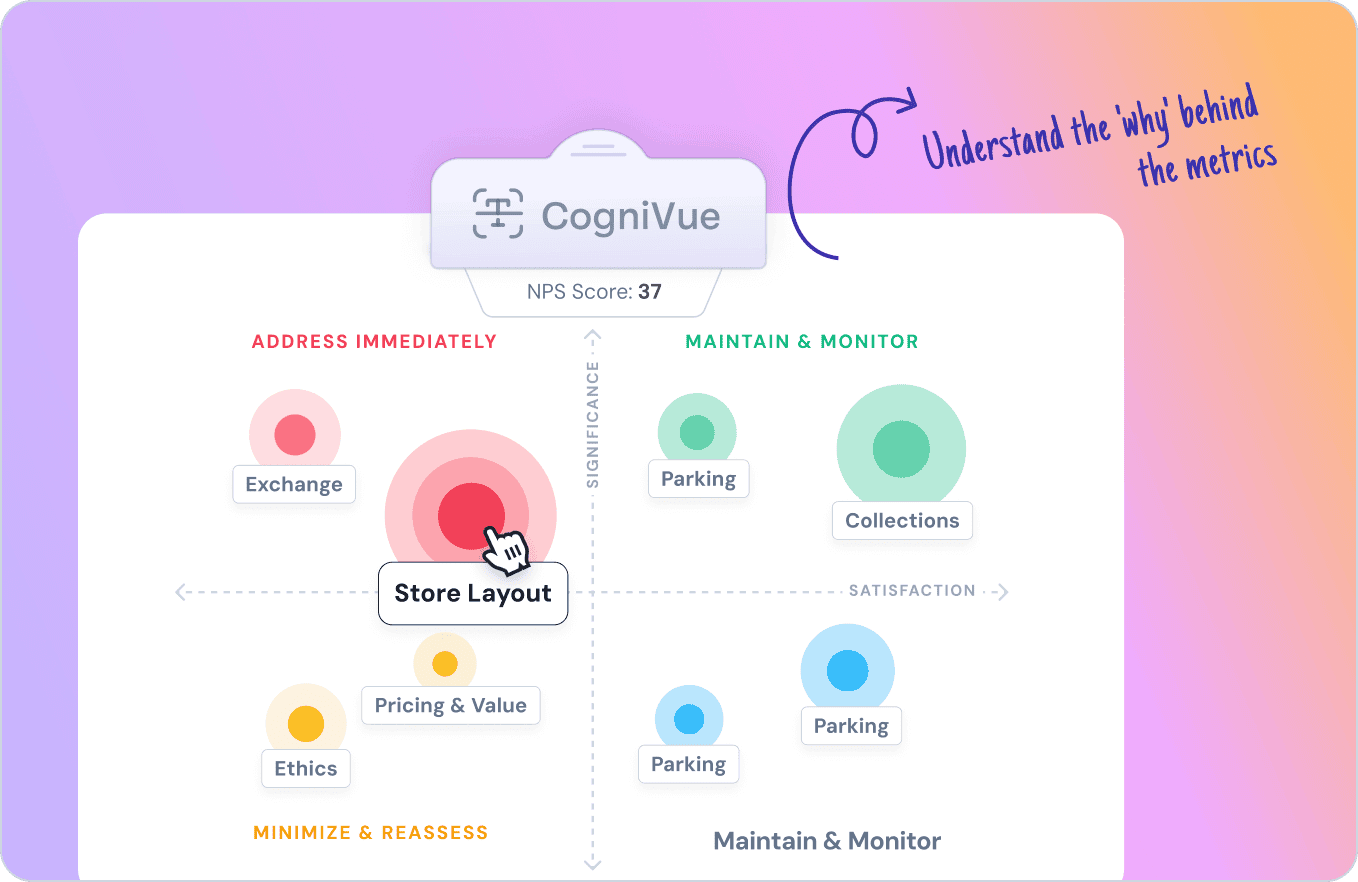
For example, CogniVue - a sentiment analysis tool gives businesses a way to understand and act on the feedback received through multiple channels.
4. Acting on feedback
Closing the feedback loop consists of 2 steps.
- Route insights to the teams responsible for a certain stage of the customer journey.
- Communicate what changed to the customer.
Customers who see their input reflected in a product update or a policy change are significantly more likely to provide feedback again, and more likely to stay loyal advocates of your brand. This sort of feedback from customers given specifically to help improve a product or a service is known as actionable feedback.
Types of feedback management tools
Very few tools cover the full feedback management process. However, with that being said, most organizations use a combination of the following across the four stages of feedback management.
Survey and feedback collection tools handle structured data collection — NPS, CSAT, CES, and custom surveys distributed across email, in-app, SMS, and web channels.
Helpdesk and support platforms capture unstructured feedback through support interactions such as tickets, live chat transcripts, and call recordings. These platforms surface feedback that customers do not submit through formal surveys.
Explore SparrowDesk, our flagship helpdesk software.
Review and social listening tools monitor public feedback across review platforms and social media channels. They capture unsolicited input — what customers say when they are not being asked — which is often the most honest signal available.
AI feedback analysis platforms like SurveySparrow sit across all three categories, processing feedback from multiple sources and surfacing themes, sentiment, and key drivers at a scale that manual review cannot match. CogniVue, SurveySparrow's AI text analytics tool which we discussed earlier, falls into this category.
Feedback management best practices
1. Decide what you are trying to learn
A feedback program starts with a clear research question.
"What do I want to get more information on?"
And follow it up with more specific questions like -
- Why are customers churning after onboarding?
- Which product features are rarely being used?
- How has satisfaction changed since the last release.
These questions form your basis of research, helping you determine which channels to use, which questions to ask, and which metrics to track.
2. Collect at the right moment
Feedback is most accurate when collected close to the experience being evaluated. Map your collection touchpoints to the moments in the customer journey where the experience is most fresh and the customer's motivation to respond is highest.
3. Segment before you analyze
Aggregate feedback hides important differences between customer groups. An overall CSAT of 78% may conceal a 60% score among new customers and a 90% score among long-tenured ones.
So its important to segment your feedback by customer type, product tier, geography, and/or lifecycle stage before drawing conclusions. The patterns that matter most are almost always visible only after segmentation.
4. Measure whether actions improved the experience
Closing the loop is not just about telling customers what changed. It is about measuring whether the change produced the intended outcome.
After acting on an insight and addressing a specific problem, check for improvements. For example, a CSAT score improvement compared across a previous time period means that an initiative worked. This creates accountability and builds the organizational evidence base for investing in feedback programs over time.
5. Ensure data privacy and compliance
Customer information needs strong protection, especially when you have regulations like GDPR governing feedback collection. Your system needs encrypted sensitive data and clear retention policies. This builds customer trust while keeping you compliant.
Top customer feedback management tools to consider
Customer feedback tools aren't necessarily important, but they can make your work simpler and much easier.
1. SurveySparrow
SurveySparrow leads the pack as the world's first Multi-UI platform that has conversational forms and chat-like surveys. The mobile-first design helps achieve 40% higher response rates through better interfaces. The platform has recurring surveys that send automatically at set times, smart logic that personalizes questions, and powerful reporting tools that turn responses into useful insights. Users can create surveys in multiple languages, which makes it perfect to collect feedback worldwide.
2. Zeda.io
Zeda.io brings together feedback from Slack, Intercom, customer portals, and in-app widgets in one place. The platform's AI-driven insights dashboard sorts feedback into categories like top complaints, requests, revenue opportunities, and reasons for churn. Product teams can use this organized data to plan development based on customer needs and revenue potential. Zeda.io also blends with popular CRM platforms like HubSpot, Salesforce, and Zendesk to build better customer profiles.
3. Nextiva
Nextiva's unified communications platform acts as a central hub to manage feedback. The system combines important feedback channels—phone calls, live chats, emails, and social media comments—into one interface. AI-powered speech and text analytics convert conversations into text and spot customer sentiment, key themes, and new trends. Teams can respond to feedback right away without switching between apps, which removes the usual gap between insight and action.
4. Birdeye
Birdeye uses AI to help businesses with multiple locations manage their feedback. The platform combines reviews from over 150 platforms to track reputation in real time. Smart AI creates quick, customized replies to customer feedback automatically. Birdeye also provides sentiment analysis, survey tools you can customize, and ways to measure how well you're doing compared to competitors.
5. Appcues
Appcues excels at gathering feedback where users are most active. The platform lets businesses create in-app questionnaires, feedback forms, and NPS surveys that capture insights at key moments. Users can share their thoughts while the experience is still fresh, which leads to more accurate feedback. Appcues connects both qualitative and quantitative data to help businesses understand not just what happens, but why it happens.
How SurveySparrow helps with feedback management?
SurveySparrow supports the full feedback management cycle, right from collection through analysis to action.
Collect -> Clarify -> Act
Collection: SurveySparrow's conversational survey format distributes NPS, CSAT, and CES surveys across email, in-app, SMS, and WhatsApp, producing completion rates significantly higher than traditional form-based surveys.
Clarify: Echo, SurveySparrow's conversational AI agent, goes further by asking follow-up questions based on each customer's response in real time, so the feedback reaching the analysis stage already has the context needed to act on it.
CogniVue processes open-ended feedback at scale, identifying themes, sentiment patterns, and key drivers across large volumes of responses. Instead of reading through hundreds of individual comments, teams get a prioritized view of what is driving satisfaction or dissatisfaction — surfaced automatically.
Act: SurveySparrow's alerting and routing workflows ensure that low scores and urgent feedback reach the right team immediately, without requiring manual monitoring of a dashboard.

Explore how SurveySparrow can transform your feedback process.
TRUSTED BY BEST-IN-CLASS BRANDS