


Online reviews influence 93% of consumers before they make a purchase decision, and 84% of people trust them as much as personal recommendations. Companies excelling at customer feedback can achieve up to 3.5x revenue growth compared to those who don't.
But here's where most teams struggle: turning feedback into action at scale.
Collecting reviews and survey responses is easy. Understanding why customers feel a certain way and responding in time—that's the hard part.
This is where AI-powered feedback systems like Echo by SurveySparrow help teams move beyond static surveys into continuous, two-way customer conversations—without adding manual effort.
This guide shows you 8 real customer feedback examples from top brands, plus practical strategies to turn even angry comments into opportunities for lasting customer relationships.
Types of Customer Feedback and What They Mean
Customer feedback examples show how different collection methods reveal what customers really think. Each type of feedback provides distinct insights to improve your products, services, and customer experience.
Let's look at different feedback channels and what they tell you about your customers' thoughts, feelings, and behaviors.
Customer Feedback Examples: Active vs passive feedback
Customer feedback splits into two main categories based on who starts the conversation. Active feedback happens when your company asks customers directly about their opinions through targeted surveys or interviews. This method works best to learn about specific product features or updates since you control the timing and collection of responses.
Passive feedback happens naturally when customers share information without prompting. This includes in-app feedback widgets, social media comments, product reviews, and support tickets. Research shows passive feedback tends to be more honest because customers aren't limited by specific survey questions or numerical ratings.
These two approaches work together—active feedback gives structured data, while passive feedback captures natural, unfiltered opinions. A complete feedback strategy needs both to paint a full picture of the customer experience.
Modern teams increasingly rely on AI-powered feedback systems to connect passive signals (like reviews or open-text responses) with proactive follow-up questions — helping them understand intent and sentiment without manual analysis.
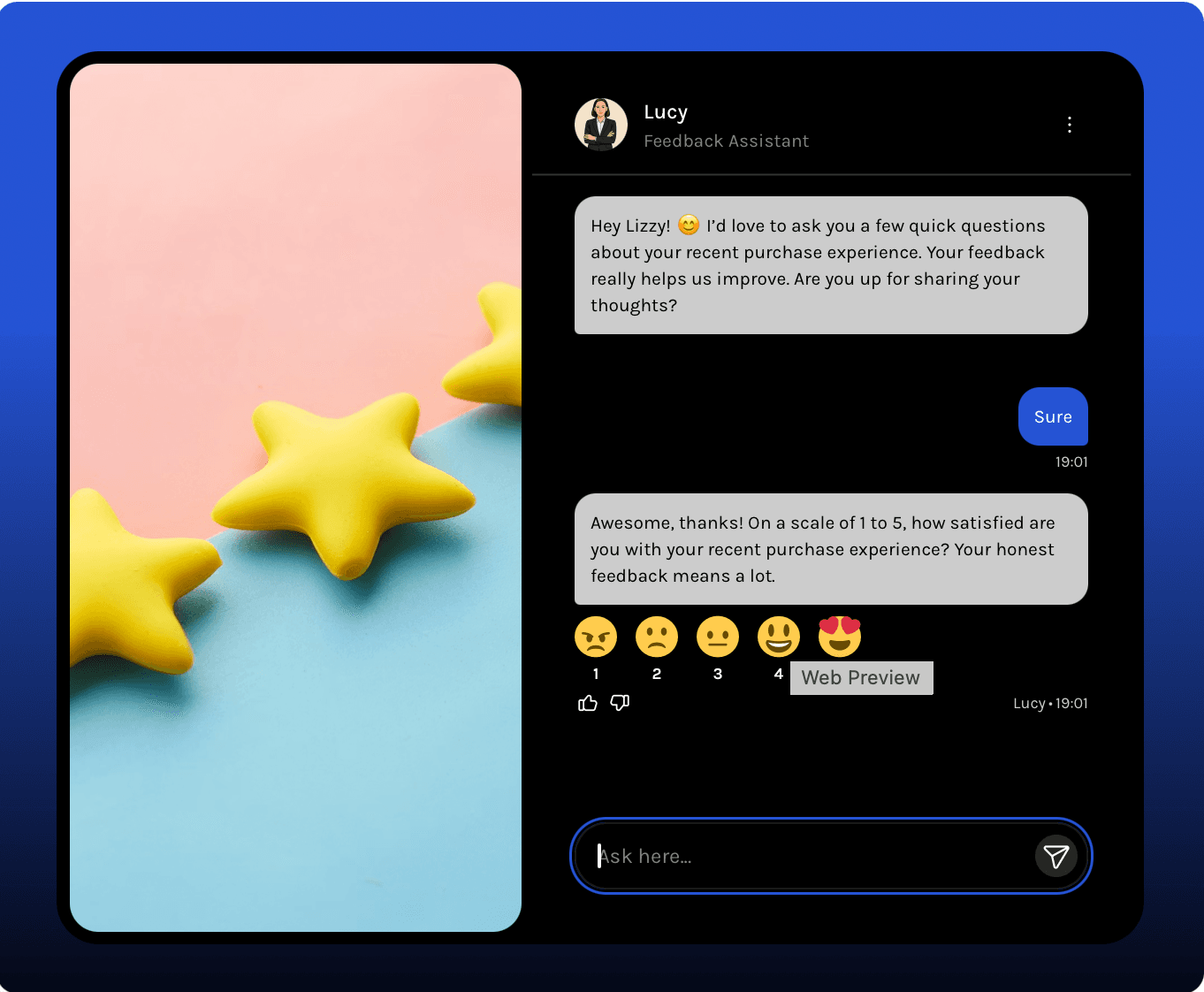
Tools like Echo by SurveySparrow automatically close this gap by engaging customers in real time, asking clarifying questions when feedback is vague, emotional, or incomplete — helping teams understand intent, not just sentiment.
Customer feedback form examples
Here are real customer feedback examples across different form types:
Different formats of feedback forms serve specific purposes and audiences. Customer feedback forms help businesses learn about satisfaction through post-purchase surveys and website exit polls. Creating effective forms matters because 93% of online consumers read reviews when making purchases.


Common form types include:
- Employee feedback forms to measure workplace satisfaction
- Product feedback forms to gather feature and usability insights
- Anonymous feedback forms to encourage honest responses about sensitive topics
- Training feedback forms to assess program effectiveness
The best forms use engaging visuals with graphics and colors, simple rating scales like the Likert scale, and space at the end for open feedback.
Customer feedback survey examples
Customer feedback examples using surveys measure specific parts of customer experience. These three metrics see the most use:
1. Customer Satisfaction Score (CSAT) asks "How satisfied were you with [company/product/service]?" on a scale from "very dissatisfied" to "very satisfied." This helps assess specific interactions or experiences.
Learn more about CSAT Survey Questions Examples
2. Net Promoter Score (NPS) shows loyalty by asking "How likely are you to recommend our company to a friend?" on a scale of 0-10. Scores of 0-6 mark detractors, 7-8 show passives, and 9-10 indicate promoters.
3. Customer Effort Score (CES) shows how much effort customers spend using your product or fixing issues by asking "How easy was it to resolve your issue with us today?".
On top of that, specialized surveys like churn surveys and product-market fit surveys show why customers leave or how much they value your product.
Customer service reviews examples
Customer feedback examples from service reviews show service quality and employee performance directly. Positive feedback often highlights team collaboration, rapport building, and empathy: "You're really good at focusing on what customers need and require. You have a real instinct to understand our customers."
Constructive feedback points to areas needing improvement: "You tend to focus too much on internal operations and you let customer problems go unheard. You need to deal with customer problems in a timely and efficient manner."
These reviews help spot training opportunities and process improvements. Good service balances policies with customer needs, responds quickly to follow-ups, and solves problems fast while keeping psychological safety intact.
The following customer feedback examples from industry leaders demonstrate best practices you can implement today.
Great Customer Feedback Examples from Real Brands
The best companies show us practical customer feedback examples that you can use in your business. These real-life examples demonstrate smart approaches that make products better and keep customers coming back.
YouTube: Simple rating with follow-up questions
YouTube keeps its feedback system simple and useful. Users can add screenshots, mark specific areas on screen, or remove personal information before they submit feedback. YouTube clearly states that "feedback goes directly to YouTube" and they use it "to troubleshoot issues, make product improvements and fix problems". This direct connection between users and developers helps create meaningful changes to the platform. Feedback is sent directly to the YouTube team for product improvements
Google: Feedback on search features
Google lets users flag issues in Autocomplete predictions and Featured Snippets with clear categories. Their blog mentions, "We plan to use this feedback to help improve our algorithms". They don't make immediate changes - instead, they collect and categorize feedback "to find things to improve in the search/ranking algorithms overall".
Netflix: Thumbs up/down for personalization
Netflix keeps things simple with thumbs up/down ratings that power their recommendations. The platform "proactively use those rankings to recommend personalized shows and movies to each customer". This simple system puts users "at the center of their viewing experience".
Canva: Visual feedback with screenshots
Canva changed their support system by adding visual feedback tools. Users take screenshots and add notes with "drawings, arrows and text boxes to pinpoint the issue". This visual method "removes ambiguity" and helps developers understand feedback across different languages, creating what their engineer calls "a visual win-win".
Mailchimp: Multi-format feedback options
Mailchimp lets users give feedback through web, mobile apps, email, SMS, and social media. They start small and grow their feedback channels once they know what works.
Amazon: In-product feedback prompts
Amazon places feedback options throughout the customer's experience. Amazon prompts feedback on delivery quality with every item, often via 5-star ratings or reviews. This regular check-in helps them "quickly address issues".
Facebook: Feature-specific feedback
Facebook wants targeted feedback about specific features. They're open about their process, saying that "feedback from community members like you helps us as we constantly improve our features and services". While they "can't respond to everyone," they "review many of the ideas people send".
Intercom: Embedded article ratings
Intercom adds rating options right into their help articles, using emoji faces for an "expressive, modern" approach. Their system "leave[s] no room for interpretation" while adding text descriptions for clarity. They learned that "over 80% of ratings given are positive," which creates "a gold mine of positive motivation".
These customer feedback examples prove that simple, well-designed systems outperform complex ones.
How to Collect and Manage Feedback Effectively
Getting good feedback isn't just about collecting data. You need to ask the right questions at the right time. A systematic approach turns customer opinions into practical insights that stimulate business growth.
When and how to ask for feedback
As shown in the customer feedback examples above, response rates depend heavily on timing. Research shows that feedback request emails work best on Wednesdays and Saturdays. Most products need different waiting periods after purchase. Hard goods like appliances need 21 days, soft goods like apparel need 14 days, and seasonal items need 7 days.
Surveys sent between 10am-2pm get better responses. The 6pm slot works well too as people finish their workday. People complete more surveys during non-working hours. The peak time is 4am because these requests sit at the top of morning inboxes.
Tools to simplify collection (e.g., SurveySparrow)
SurveySparrow's accessible interface turns standard forms into chat-like experiences. This boosts completion rates up to 40%. The platform sends surveys through email, social media, websites, and messaging apps like WhatsApp.
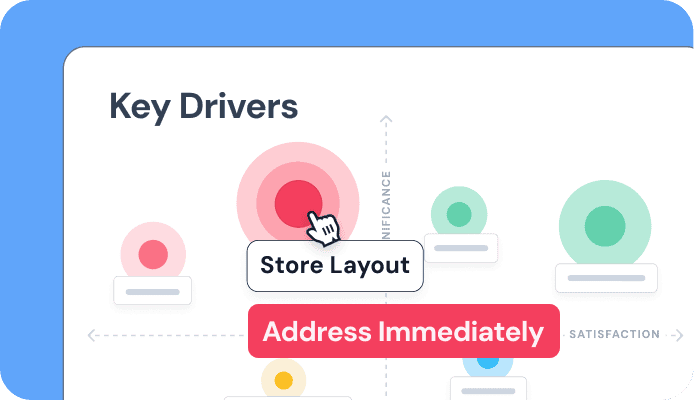
CogniVue, the platform's AI-powered analytics tool, turns raw feedback into practical insights. Teams can make evidence-based decisions without manual work. SurveySparrow makes the feedback process simple with automated CSAT follow-ups and immediate dashboards.
Creating a customer feedback loop
A complete feedback loop needs four key steps: collection, categorization, action, and follow-up. You start by gathering feedback through multiple channels. Next, you sort responses into groups like product quality, feature requests, or service issues. The customer feedback examples from Netflix and Amazon demonstrate this four-step loop in action.
After analysis, teams should prioritize improvements based on frequency, severity, and feasibility. The final step shows customers how their input created change. This proves you value their opinions and encourages them to share more feedback.
As feedback volumes grow, many teams rely on automation and AI-driven workflows to categorize responses, prioritize issues, and ensure follow-ups don’t fall through the cracks. Some platforms, such as Echo, automate this entire loop — from follow-up to insight routing — without requiring manual analysis.
Avoiding common mistakes in feedback forms
Survey creators often make basic mistakes. They make questions mandatory without "N/A" options, ask for known information, and use too many text-response questions. Questions with two ideas like "How accurate and clear was our documentation?" confuse respondents.
Surveys shouldn't ask sensitive questions too early or reach customers before they know your product well. Keep questionnaires short - 10 questions max works best.
Check out this comprehensive list of Survey Error to avoid
Conclusion
Customer feedback is the difference between guessing and knowing what drives growth. These customer feedback examples—from Netflix's simple thumbs up/down to YouTube's visual screenshots—prove that the right system turns complaints into revenue and casual users into advocates. Of course, the way you collect, analyze, and respond to customer opinions affects your relationship with them and impacts your bottom line.
Good feedback management needs the right timing, channels, and thoughtful follow-up. Gathering opinions is important, but acting on that information matters more. Companies that excel at implementing feedback turn casual customers into loyal brand supporters who promote their products naturally.
As these customer feedback examples demonstrate, the best brands make it easy to collect feedback that involves customers. Chat-like surveys that feel more like natural discussions than formal questionnaires get higher completion rates and honest responses. SurveySparrow's easy-to-use interface shows this approach, which makes the feedback process enjoyable instead of burdensome for customers.
Remember that feedback means more than just data points—it represents real-life experiences with your product or service. Customers who share their thoughts expect acknowledgment and action. You can show you value their input by telling them about changes you made based on their feedback. This encourages them to stay involved.
Customer feedback gives you a unique chance to see your business through your customers' eyes. These insights and practical collection strategies help you build a feedback system that identifies problems and uncovers opportunities for innovation that competitors might miss. Your customers have answers to your most pressing business questions—you just need to ask the right questions at the right time.