


Customer feedback management helps businesses collect, analyze and act on customer feedback to create better online experiences. This approach lets organizations gather insights from different channels. They can understand what customers think and make improvements based on real experiences. The process turns basic feedback into valuable insights that shape business decisions.
The process works in three connected parts that form a cycle. Companies first collect feedback through surveys, online reviews, social media, and support tickets. This includes both direct feedback from surveys and interviews, and indirect feedback from customer behavior. Next, they analyze the data to spot patterns and areas that need work. The final step turns these insights into real changes in products, services, and customer experiences.
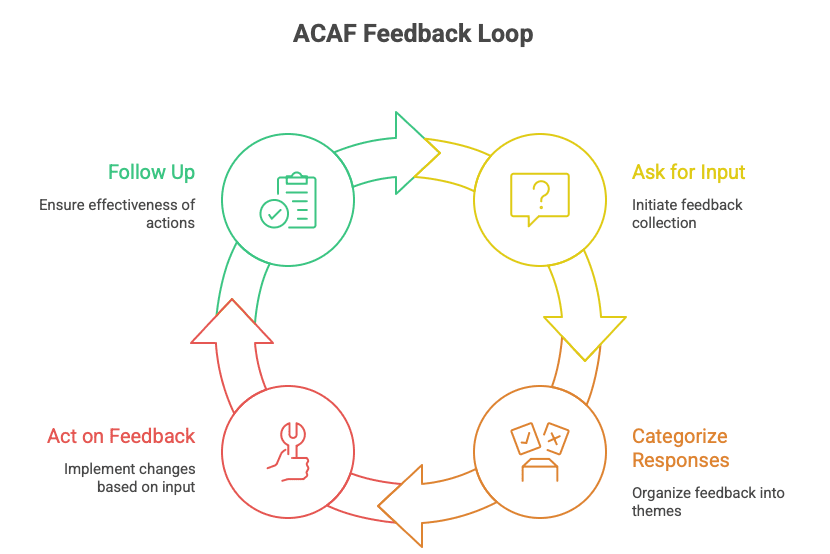
A good feedback management system needs a clear framework. Most organizations use the ACAF (ask, categorize, act, follow up) feedback loop. The process starts by asking for customer feedback. Teams then sort this information into categories and make needed changes. They check back with customers to make sure their concerns were fixed. This system ensures customer opinions shape business strategies.
Review management is different from customer feedback management. Review management deals with public comments on outside platforms. Customer feedback management works with both public and private feedback throughout the customer's experience. It guides strategic choices and long-term improvements instead of just handling individual reviews.
Big companies need customer feedback management to keep customers happy and grow their business. 91% of consumers rely on online reviews for purchase decisions. A well-planned feedback system helps companies find and fix problems before they get worse.
Companies need specific tools to manage customer feedback well. Modern businesses use various software solutions to help with collection, analysis, and action steps. These range from survey platforms to CRM systems that track feedback across digital channels. New systems use AI-powered analytics to find patterns quickly and spot urgent issues.
Customer feedback management ended up changing how companies work with customer opinions. It creates a clear method to turn feedback into real improvements instead of treating it as random information. This careful approach helps businesses meet customer expectations. Companies can find new opportunities and stay competitive in markets that focus on customer needs.
Why is Customer Feedback Management important?
Customer feedback management plays a vital role in businesses of all sizes. 73% of consumers expect companies to anticipate needs per PwC global surveys. About 73% of consumers worldwide expect companies to know what they need and want. These numbers show why businesses must have well-laid-out feedback processes to succeed.
The way companies handle customer feedback shapes their growth in many ways. The Zendesk Customer Experience Trends Report reveals that 42% of CX leaders say customer experience has a huge effect on business growth as per Zendesk Customer Experience Trends Report 2024/2025. This link between feedback management and performance shows up in many business metrics.
Companies that use feedback systems well make more money because they keep their customers longer and sell more products to them. A good feedback system helps businesses spot their most valuable customers and give them better service, which leads to better financial results.
Better products and services come from good feedback management. Companies can fine-tune what they offer by using their customers' insights. This targeted approach helps avoid making features nobody wants and gets successful products to market faster.
Good feedback management builds lasting customer relationships. Customers become more loyal when they see their suggestions turn into real changes. Reports also show that 92-97% of people would give feedback if they knew it would make a difference. This creates a positive cycle - feedback guides improvements, which makes customers happier and promotes long-term relationships.
Businesses looking to streamline processes find feedback management helpful. They can spot patterns in feedback to fix root problems instead of just treating symptoms. This smart approach cuts support costs and makes all departments work better.
Companies that handle feedback well stand out from their competition. Those who respond quickly to their customers' needs do better in crowded markets. Using feedback insights helps companies stay flexible and adapt to market changes faster than others who don't have good feedback systems.
Good feedback management also reduces business risks. Companies can stop customers from leaving by quickly spotting unhappiness through sentiment analysis. This early warning lets them step in at key moments in the customer's experience to save important relationships.
From a business point of view, feedback management helps leaders make choices based on real information. Instead of guessing, they can use actual customer priorities and behaviors to make better decisions with more predictable results.
The challenge most businesses face isn't knowing feedback matters—it's collecting enough quality responses to make confident decisions. Traditional survey methods often struggle with completion rates, leaving companies with incomplete data and blind spots in their customer understanding. The difference between knowing you need feedback and actually getting actionable insights comes down to how you ask.
How to collect customer feedback effectively
Companies need effective ways to collect valuable customer feedback through multiple channels. The most successful businesses use different approaches to get higher response rates and learn about their customers' experiences.
Surveys and forms
Surveys are the most direct way to capture customer opinions and priorities. A good survey has clear goals, unbiased questions, and stays brief to encourage completion. The best results come from:
- Short surveys with few questions to prevent abandonment
- Loyalty rewards and other incentives to boost responses
- Simple rating scales like the Likert scale that are easy to complete
- Optional open-ended questions to get detailed feedback
Customer satisfaction (CSAT) surveys help businesses understand customer satisfaction levels with services. Net Promoter Score (NPS) surveys measure customer loyalty by asking customers if they would recommend the company to others. Businesses should keep their surveys between 5-13 questions and mix qualitative and quantitative questions for the best results.
Live chat and support calls
Live chat support lets customers communicate instantly without phone support tag. Research shows 28% of consumers expect a chat reply within five minutes, which shows how much people just need quick responses. Chat support requests grew by about 80% in 2020, making it a crucial feedback channel.
Live chat data gives valuable insights into customer experiences. A well-implemented live chat system can:
- Make customer experience better by solving issues quickly
- Help support teams work more efficiently
- Prevent small issues from becoming bigger problems
Support representatives on calls are often the first point of contact for customer issues. They provide direct insights into common problems customers face with products or services.
Social media and review platforms
Social media has become essential for customer service, with about 42% of people worldwide using these platforms. Companies can get honest feedback through social listening - tracking mentions of brands, products, and competitors on social media, even when customers don't contact them directly.
Online reviews are another key source of feedback. Reviews on company websites or platforms like Yelp, Google Business Profile, or Trustpilot help potential customers make choices. Google gets 81% of all online reviews, and review numbers have grown by 13% recently.
The best ways to collect feedback on social media include:
- Creating hashtags to track mentions
- Writing post captions that ask for feedback
- Using social media monitoring tools to track conversations
- Creating private communities for customers
In-app feedback and emails
In-app feedback collection helps businesses get insights while people use their products. This method works well because users can share thoughts right after their experience. The right in-app feedback tools can increase response rates and capture details other methods might miss.
To collect good in-app feedback:
- Ask for feedback at the right time, like after task completion
- Use simple, clear questions
- Combine rating systems with open-text fields
Businesses can use different in-app tools like microsurveys, feedback widgets, and AI chatbots to get better feedback. Research shows 87.8% of customers are more likely to stay with a brand that responds to their feedback.
Email works well for collecting feedback, especially with personalized messages sent at the right time. Asking for feedback after important interactions like purchases or support calls usually gets better responses.
Steps in the customer feedback management process
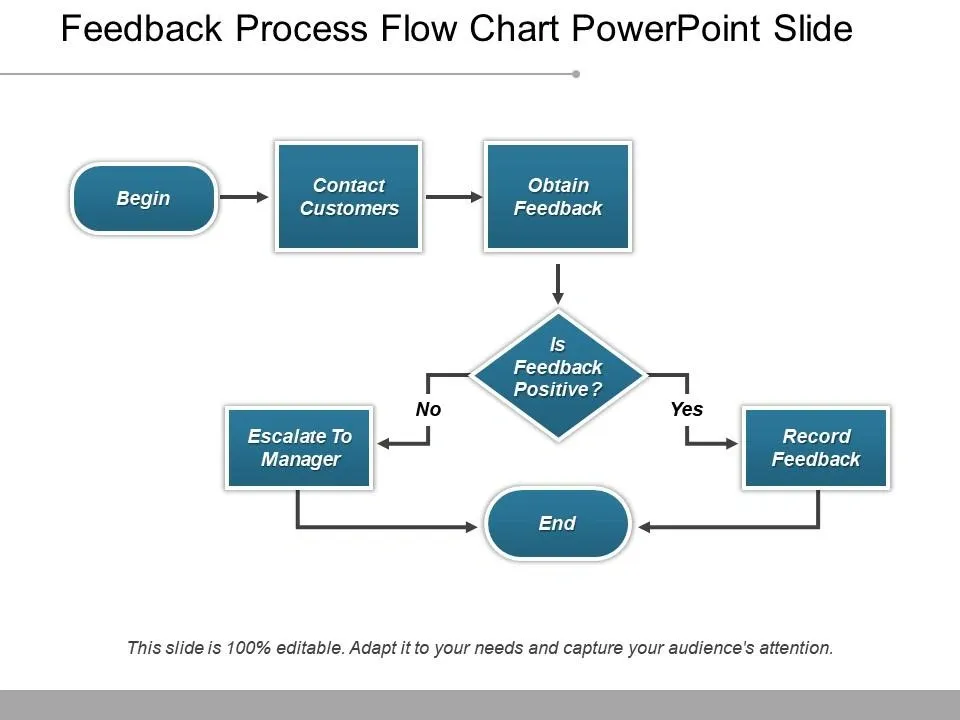
Image Source: SlideTeam
Customer feedback management works best with a well-laid-out approach that turns raw input into meaningful action. The A.C.A.F. Customer Feedback Loop (Ask, Categorize, Act, Follow-up) gives businesses a step-by-step way to handle customer opinions. This method helps companies get the most value from customer insights.
1. Collect feedback from all channels
The first step is to gather feedback from every possible source. Companies need to look at customer support emails, social media comments, online reviews, website forms, surveys, and direct customer communications. A central database helps store all feedback in one place.
Consumer intelligence platforms make it easy to automatically collect data from social media, emails, surveys, review platforms, call center logs, and chat transcripts. This way, valuable insights don't get lost in different systems.
2. Analyze and categorize feedback
Raw feedback needs proper sorting to become useful. Companies should set up clear sorting rules to classify different types of feedback. They can sort by product quality, customer service, pricing concerns, or feature requests. Tags can show urgency, sentiment, or customer segments.
Natural Language Processing (NLP) helps spot important themes in customer feedback automatically. This analysis helps find useful patterns and reveals key business activities or problems through repeated pattern analysis.
3. Prioritize action items
Companies must decide which insights need immediate attention after sorting the feedback. They look at how many customers it affects, how it fits with company goals, how often it comes up, and how easy it is to implement.
The RICE scoring system (Reach, Impact, Confidence, Effort) helps measure feedback by looking at user reach, business effect, data reliability, and work needed. Value vs. Effort matrices help find quick wins by comparing customer impact with development needs.
4. Implement changes and track results
Good ideas need proper execution. Companies should create specific action plans, assign owners for changes, and set clear deadlines. Starting with small-scale implementation helps understand possible effects before full rollout.
Measuring key performance indicators shows how well changes work. Companies should watch metrics tied to their goals and collect up-to-the-minute data analysis to adjust plans. This evidence-based approach ensures changes fix customer problems.
5. Close the feedback loop
Closing the loop means telling customers about changes made from their input. Companies should thank customers, explain what changed, and show how their suggestions made a difference. This builds trust and keeps customers engaged. A closed-loop system helps build loyalty—84% of customers stay with brands that listen and act on their ideas.
While the ACAF framework provides a clear roadmap, executing it effectively requires the right infrastructure. Many businesses struggle with low survey completion rates—averaging just 10-15% with traditional forms. This means 85% of your customers' voices go unheard, leaving critical insights on the table. Conversational survey platforms are changing this dynamic by making feedback collection feel natural rather than transactional. When surveys mirror the chat experiences customers use daily, completion rates can jump by 40% or more, giving you the representative data needed to confidently close the feedback loop and drive real business impact.
Top customer feedback management tools to consider
The right tools are the foundations of good customer feedback management. Modern solutions help streamline feedback from collection to action with specialized features.
SurveySparrow
SurveySparrow leads the pack as the world's first Multi-UI platform that has conversational forms and chat-like surveys. The mobile-first design helps achieve 40% higher response rates through better interfaces. The platform has recurring surveys that send automatically at set times, smart logic that personalizes questions, and powerful reporting tools that turn responses into useful insights. Users can create surveys in multiple languages, which makes it perfect to collect feedback worldwide.
14-day free trial • Cancel Anytime • No Credit Card Required • No Strings Attached
Zeda.io
Zeda.io brings together feedback from Slack, Intercom, customer portals, and in-app widgets in one place. The platform's AI-driven insights dashboard sorts feedback into categories like top complaints, requests, revenue opportunities, and reasons for churn. Product teams can use this organized data to plan development based on customer needs and revenue potential. Zeda.io also blends with popular CRM platforms like HubSpot, Salesforce, and Zendesk to build better customer profiles.
Nextiva
Nextiva's unified communications platform acts as a central hub to manage feedback. The system combines important feedback channels—phone calls, live chats, emails, and social media comments—into one interface. AI-powered speech and text analytics convert conversations into text and spot customer sentiment, key themes, and new trends. Teams can respond to feedback right away without switching between apps, which removes the usual gap between insight and action.
Birdeye
Birdeye uses AI to help businesses with multiple locations manage their feedback. The platform combines reviews from over 150 platforms to track reputation in real time. Smart AI creates quick, customized replies to customer feedback automatically. Birdeye also provides sentiment analysis, survey tools you can customize, and ways to measure how well you're doing compared to competitors.
Appcues
Appcues excels at gathering feedback where users are most active. The platform lets businesses create in-app questionnaires, feedback forms, and NPS surveys that capture insights at key moments. Users can share their thoughts while the experience is still fresh, which leads to more accurate feedback. Appcues connects both qualitative and quantitative data to help businesses understand not just what happens, but why it happens.
Best practices for managing customer feedback
Companies can get the most value from customer insights by setting up standard procedures for feedback management. A well-organized system will turn feedback into a valuable asset instead of scattered information.
Centralize all feedback in one place
A central feedback repository keeps valuable insights from getting scattered across departments. Teams work better together when they can access the same feedback data. This helps organizations spot patterns they might miss otherwise. Having all feedback in one place lets teams track everything from collection to resolution.
Assign ownership for follow-up
Each customer-facing team needs "feedback champions" to maintain accountability. These champions become the go-to experts for feedback processes and help their teams with questions. Clear ownership prevents feedback from being ignored and ended up building customer trust.
Respond to customers promptly
Quick response times matter when handling feedback. A response within 24-48 hours shows customers you care and prevents their frustration from growing. The most pressing issues need priority based on how severe they are, how often they occur, and how easily you can fix them.
Use feedback to guide product decisions
Your feedback should shape:
- Product roadmap prioritization
- Feature development decisions
- User experience improvements
Ensure data privacy and compliance
Customer information needs strong protection, especially when you have regulations like GDPR governing feedback collection. Your system needs encrypted sensitive data and clear retention policies. This builds customer trust while keeping you compliant.
Transform Your Feedback Management
Customer feedback management works when you have the right tools to collect, analyze, and act on insights efficiently. Traditional surveys struggle with 10-15% completion rates, leaving 85% of customer voices unheard—but conversational platforms are changing that.
SurveySparrow combines conversational surveys with AI-powered intelligence to streamline your entire feedback process. CogniVue AI automatically analyzes responses, detects sentiment, and surfaces actionable insights without manual effort. SmartReach optimizes survey distribution across email, SMS, and web to maximize response rates. The result? 40% higher completion rates and faster insights that drive real business decisions.
Whether you're launching your first feedback program or upgrading disconnected tools, SurveySparrow provides the infrastructure to turn the ACAF framework into practice. Start your free trial today—no credit card required.
14-day free trial • Cancel Anytime • No Credit Card Required • No Strings Attached