

















Every business collects valuable information over time. Customers share their experiences through surveys, product reviews, support conversations and social media comments. Customer success teams identify recurring complaints, marketing teams track changing preferences and leadership teams make decisions that influence future growth. Yet much of this feedback remains scattered across different platforms, spreadsheets and reporting tools.
Consider a company receiving hundreds of customer responses every week. Employees might spend hours reviewing comments, categorizing complaints and preparing reports before identifying the most important issues. Meanwhile, customers may continue experiencing the same problems because their feedback hasn't been translated into meaningful action.
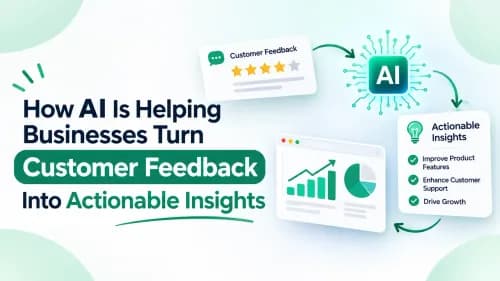
The problem isn't necessarily a lack of customer feedback. It's that useful insights can be difficult to identify, interpret and apply. Artificial intelligence is changing how businesses approach this challenge. Instead of treating feedback analysis as a separate administrative responsibility, organizations can use AI to identify patterns, understand customer sentiment, prioritize recurring issues and support better business decisions. The real opportunity isn't simply collecting more responses. It's creating a system where customer feedback leads to measurable improvements.
Why Traditional Customer Feedback Analysis Often Falls Short
Most companies recognize the importance of listening to their customers, but analyzing feedback consistently can be challenging. Customer expectations change, new products enter the market and service issues emerge unexpectedly. Traditional feedback analysis doesn't always keep pace with these developments.
Several recurring problems contribute to this gap.
- Customer feedback becomes scattered across multiple platforms. A company's most useful insights might exist in survey responses, online reviews, email conversations, support tickets and social media comments. Employees must collect information from different sources before they can understand the complete customer experience.
- Manual analysis takes considerable time. Reviewing hundreds or thousands of open-ended responses requires significant effort. Employees may need to categorize comments, identify repeated complaints and prepare summaries before presenting their findings.
- Important patterns can remain hidden. A single complaint might appear insignificant, but hundreds of similar comments could indicate a serious product or service issue. Manual analysis makes it harder to recognize these patterns quickly.
- Businesses sometimes collect feedback without acting on it. Customers may explain exactly what needs improvement, yet their suggestions never reach the teams responsible for making changes. Without a clear follow-up process, feedback becomes a reporting exercise rather than a source of improvement.
These challenges become more noticeable as businesses grow. An effective feedback management process must therefore do more than collect responses. It should help organizations analyze information, identify priorities and turn insights into practical decisions.
How AI Is Changing Customer Feedback Analysis
AI-powered feedback tools can support several stages of the customer feedback process, from analyzing survey responses to identifying emerging concerns and recommending potential improvements.
Their effectiveness depends on the quality of the collected data, the capabilities of the platform and how well the technology fits existing business workflows.
Turning Open-Ended Responses Into Useful Insights
Customer feedback doesn't always come in the form of ratings or multiple-choice answers. Customers often explain their experiences in their own words, describing what they liked, what disappointed them and what they would like to see improved.
Traditionally, employees must read these comments individually and organize them into meaningful categories. AI can reduce some of that effort by identifying recurring topics, summarizing responses and grouping similar feedback together.
For example, an online retailer might receive hundreds of comments mentioning delayed deliveries, confusing return policies and helpful customer support. AI can help organize these responses into categories so the team can understand which issues appear most frequently.
Employees can then review the results, investigate the underlying causes and decide which improvements deserve priority.
This approach is particularly useful for businesses receiving large volumes of qualitative feedback. However, AI-generated summaries should not automatically be treated as verified conclusions. Human review remains important for understanding context, checking accuracy and recognizing unusual customer concerns.
Understanding Customer Sentiment More Effectively
Customer satisfaction scores provide useful information, but they don't always explain how customers feel about a particular experience.
A customer might give a product a moderate rating while expressing frustration about delivery. Another customer might praise the support team while criticizing the company's pricing. Understanding these differences helps businesses identify what is working and what needs attention.
AI-powered sentiment analysis can help classify feedback into positive, negative and neutral categories. More advanced analysis may also identify recurring themes and the factors influencing customer satisfaction.
For example, a subscription-based business might discover that customers appreciate its product features but frequently complain about the cancellation process. This insight allows the company to investigate a specific part of the customer journey instead of making broad assumptions about satisfaction.
Sentiment analysis becomes more useful when combined with customer ratings, survey results and other relevant information. Businesses should also review ambiguous responses because sarcasm, cultural differences and context can affect automated interpretation.
Identifying Emerging Trends Before They Become Bigger Problems
Customer expectations can change quickly. A new product feature, pricing adjustment or service policy may create concerns that weren't visible in earlier reports.
Traditional reporting often focuses on historical averages. While these figures help measure performance, they may not reveal new issues until the problem becomes widespread.
AI can help businesses monitor incoming feedback for emerging topics, repeated complaints and changes in customer sentiment.
Consider a software company that introduces an updated dashboard. Initially, customer satisfaction scores may remain stable, but feedback begins mentioning navigation difficulties more frequently. An AI-assisted analysis process could highlight this developing pattern and help the product team investigate it earlier.
The goal isn't to assume that every new complaint represents a major problem. Instead, AI helps teams identify signals that deserve further investigation before they affect a larger portion of the customer base.
Reducing Repetitive Work Across Departments
Different departments often collect feedback that overlaps with information gathered by other teams.
Marketing teams conduct customer surveys, sales representatives hear objections during conversations, support agents document recurring complaints and product managers review feature requests. Without coordination, these insights may remain isolated within individual departments.
AI can help organize feedback from different sources, identify overlapping themes and prepare summaries for relevant teams.
For example, customer feedback about a product's onboarding experience could support several activities:
- A product team can identify usability problems and prioritize improvements.
- A customer support team can prepare troubleshooting resources for common questions.
- A marketing team can better understand customer expectations before launching a campaign.
- A customer success team can identify areas where customers need additional guidance.
Each department has different responsibilities, but all can benefit from a clearer understanding of customer needs.
When feedback is shared appropriately, businesses can reduce duplicated analysis and coordinate their improvement efforts more effectively.
The Role of AI-Powered Feedback Management Software in Modern Businesses
As organizations collect increasing amounts of customer information, spreadsheets and general-purpose reporting tools may not be sufficient for managing feedback across teams.
Businesses often need centralized feedback collection, survey management, sentiment analysis, reporting dashboards, collaboration features and workflows that help teams follow up on important issues.
AI-powered feedback management platforms can bring these capabilities together. Depending on the solution, they may help businesses collect responses, categorize comments, identify trends and turn findings into actionable recommendations.
For example, an online retailer might want to understand why customers abandon purchases. A software company may need to identify recurring usability problems, while a service provider might focus on improving customer satisfaction after support interactions.
Although their objectives differ, each organization benefits from understanding the reasons behind customer feedback rather than simply counting responses. Documenting these findings is equally important, as teams need a reliable way to preserve insights and share them across departments. Using AI Documentation Software can help businesses organize important knowledge and make documented insights easier to access and reuse.
Choosing the right solution requires looking beyond automated reporting. The platform should fit the organization's data requirements, privacy expectations, integration needs and decision-making processes. A tool that produces attractive dashboards but doesn't help teams investigate issues or follow up with customers may offer limited practical value.
How Different Business Teams Can Benefit From AI-Powered Feedback Analysis
The value of AI becomes clearer when examined through everyday business activities.
| Department | Common feedback challenge | Potential AI-supported solution |
|---|---|---|
| Customer Support | Repeated complaints are difficult to track | Categorization of recurring issues and sentiment analysis |
| Marketing | Customer preferences change over time | Analysis of preferences, expectations and campaign feedback |
| Sales | Customer objections are recorded inconsistently | Identification of recurring concerns and purchasing barriers |
| Product Management | Feature requests arrive from many scattered channels | Grouping and prioritizing requests by frequency, sentiment and customer impact |
Turning Feedback Into Action With AI
AI doesn't replace the need to listen to customers. It makes listening practical at scale. By organizing open-ended responses, reading sentiment, flagging emerging issues and sharing insights across teams, AI helps businesses spend less time sorting feedback and more time acting on it.
The best results come from combining AI with human judgment. Teams still need to verify findings, understand context and decide which improvements matter most. When those pieces work together, customer feedback stops being a reporting exercise and becomes a dependable driver of better products, services and experiences.