Every founder and product marketer has felt it: that mix of excitement and dread right before a launch. You've built something you believe in but does the market actually want it?
A market research survey for a new product is the fastest, cheapest way to answer that question before you spend another rupee, dollar, or engineering sprint on it. Done right, it tells you whether there's real demand, what to charge, who your buyer actually is, and which features matter versus which ones are just nice-to-haves.
This guide covers everything you need to run one well: the types of surveys to use at each stage of development, 40+ ready-to-use questions organized by goal, how to design a survey people actually finish, how to read the results without fooling yourself, and the mistakes that quietly wreck most product research.
What Is a Market Research Survey for a New Product?
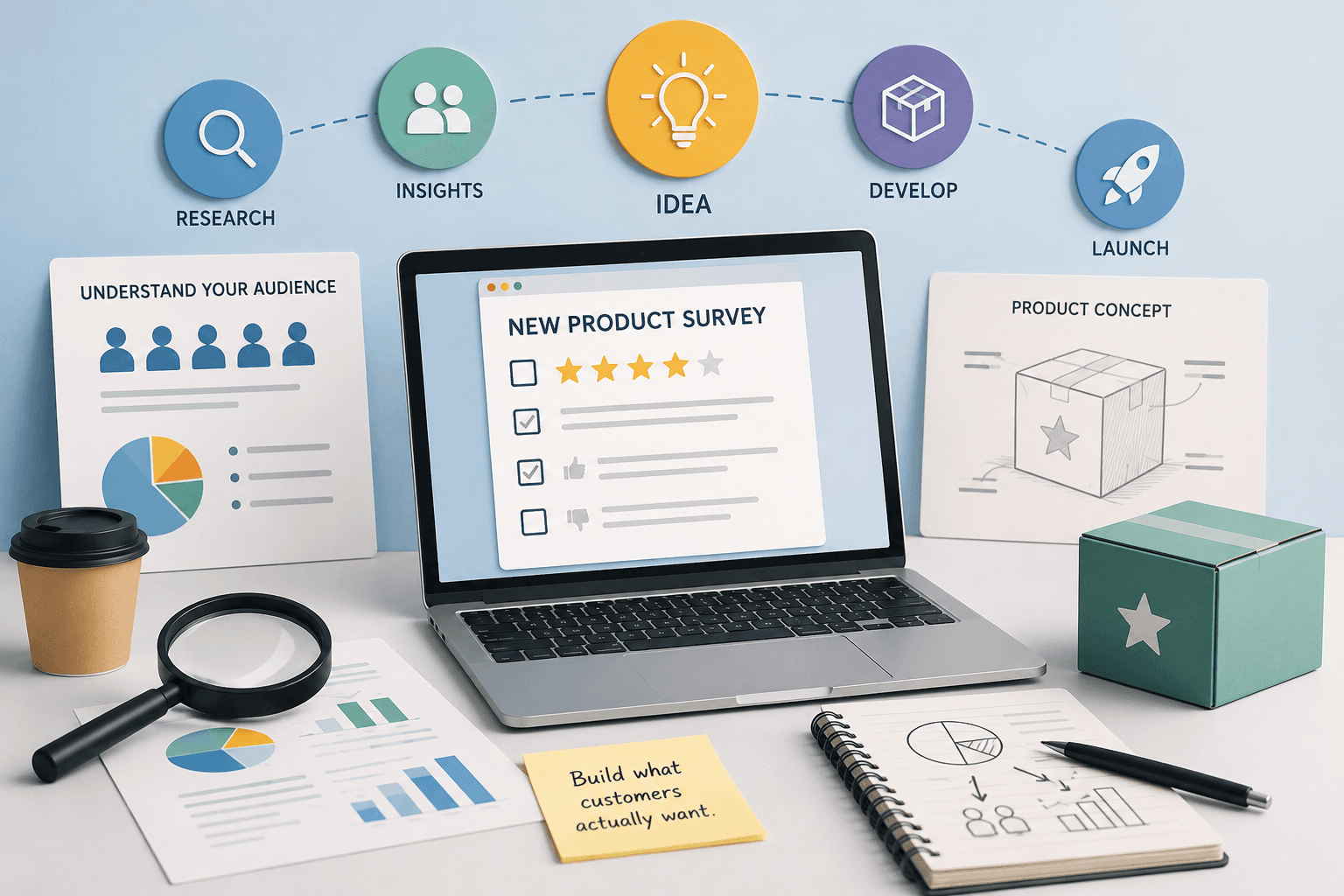
A market research survey for a new product is a structured set of questions sent to your target audience, existing customers, prospects, or a lookalike panel to measure demand, validate a concept, test pricing, or understand positioning before (or shortly after) a launch.
Unlike a general customer satisfaction survey, a new-product survey is forward-looking. It's not asking "how did we do?" it's asking "would this be valuable to you, and how valuable?" That distinction changes the questions you ask, who you send them to, and how you interpret the answers.
Surveys aren't the only market research tool interviews, focus groups, and usage data all matter too but they're the only method that gives you quantifiable, comparable data at scale in days rather than weeks. That's why they're usually the first tool product and growth teams reach for.
Why You Shouldn't Skip This Step
It's tempting to trust your gut, especially when you're close to the product. But the data on this is consistent: analyses of startup post-mortems by CB Insights have repeatedly found that "no market need" is the single most-cited reason new ventures fail well ahead of running out of cash, weak teams, or poor timing. In other words, most failed products weren't killed by execution problems. They were killed by a demand problem nobody checked for early enough.
A market research survey for a new product doesn't guarantee success, but it catches the two most expensive mistakes before they happen:
- Building something nobody asked for, a demand problem
- Building the right thing for the wrong audience or at the wrong price, a positioning problem
Both are cheap to fix on paper. Both are brutally expensive to fix after launch.

Stop guessing. Start surveying your market
TRUSTED BY BEST-IN-CLASS BRANDS


When to Run Each Type of Survey: A Stage by Stage Map
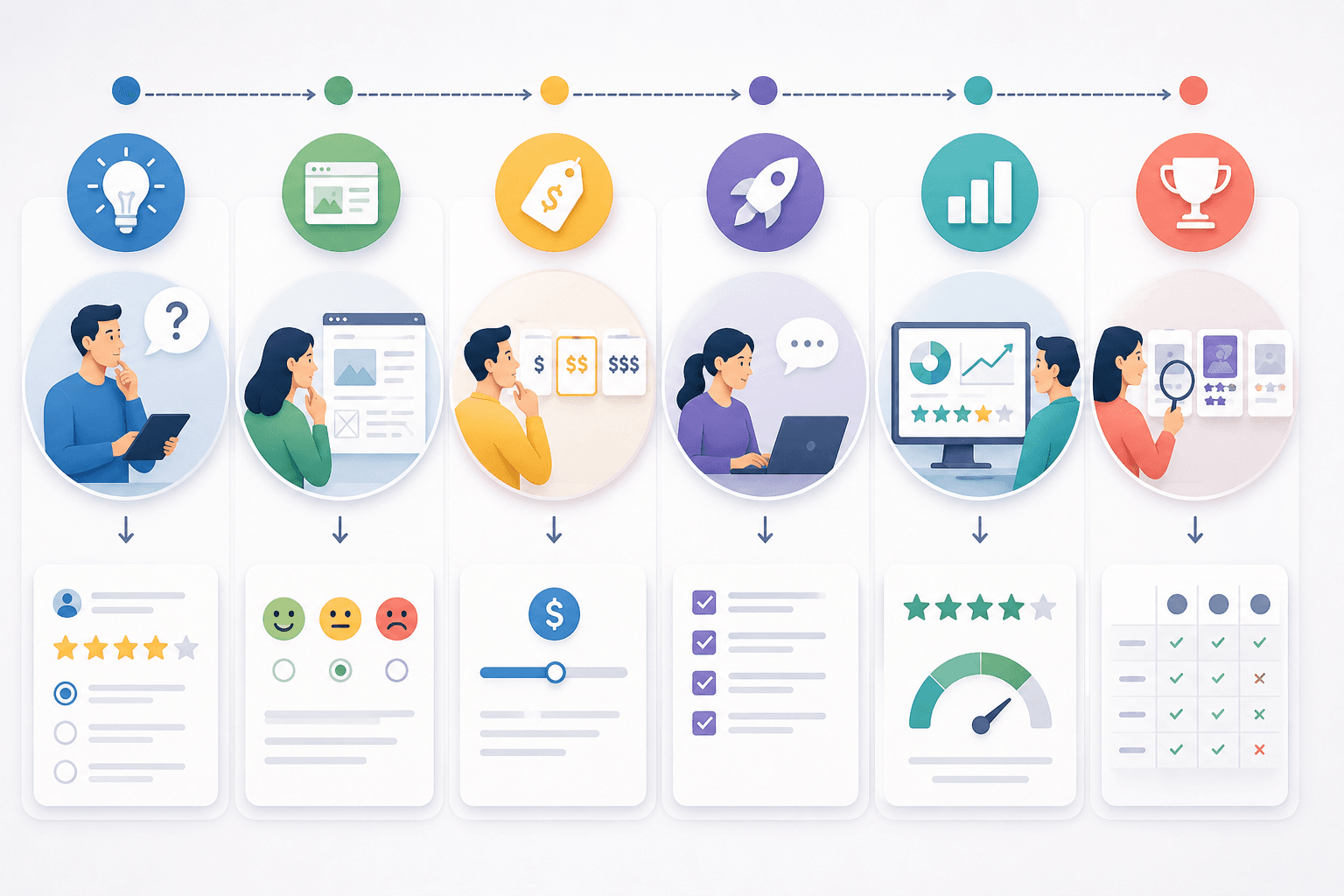
Not every market research survey for a new product looks the same. What you ask and who you ask should change depending on where the product is in its lifecycle.
| Stage | Goal | Survey type |
|---|---|---|
| Idea stage | Confirm the problem is real and worth solving | Idea & demand validation survey |
| Concept stage | Test reactions to a specific concept, mockup, or one-pager | Concept testing survey |
| Pricing stage | Find the price range the market will accept | Pricing / willingness-to-pay survey |
| Pre-launch / beta | Get structured feedback from early users | Beta feedback survey |
| Post-launch | Measure whether the product has found product-market fit | Product-market fit (PMF) survey |
| Ongoing | Understand how you stack up against alternatives | Competitive positioning survey |
Running the right survey at the right stage is what separates useful research from a stack of data nobody uses. Below is what each one should actually contain.
1. Idea & Demand Validation Survey
Use this before you've built anything. The goal is to find out if the problem is real, how painful it is, and what people currently do to solve it (including "nothing").
- How do you currently handle [the problem]?
- On a scale of 1–5, how big of a problem is [X] for you today?
- How much time or money does [the problem] cost you each month?
- Have you actively searched for a solution to this before?
- What have you tried so far, and what didn't work about it?
- If a solution existed, how likely would you be to try it? (Very unlikely – Very likely)
- What would need to be true for you to switch from your current approach?
2. Concept Testing Survey
Use this once you have a concept, mockup, or landing page before writing production code.
- Based on this description, how well does this product solve [the problem]? (Not at all – Extremely well)
- What's the single most appealing thing about this concept?
- What's missing or unclear about this concept?
- How different does this feel from what you use today?
- How likely are you to recommend this to a colleague, based on this concept alone? (0–10)
- Which of these two versions of the concept do you prefer, and why? (for A/B concept tests)
- What would stop you from trying this?
3. Pricing & Willingness-to-Pay Survey
Use the Van Westendorp Price Sensitivity model four simple questions that map out a realistic price range without ever asking "would you pay $X?", which tends to produce unreliable answers.
- At what price would this product be so cheap you'd question its quality?
- At what price would this be a bargain — a great value for the money?
- At what price would this start to feel expensive, but you'd still consider it?
- At what price would this be too expensive to consider at all?
- How does this price compare to what you currently spend on alternatives?
- Which pricing model would you prefer: one-time purchase, subscription, or usage-based?
4. Product-Market Fit Survey
Run this once real users have had time to use the product (ideally after 2+ sessions or a few weeks of use). This is the closest thing to a definitive early signal — Sean Ellis's PMF survey has become the industry standard test.
- How would you feel if you could no longer use [product]? (Very disappointed / Somewhat disappointed / Not disappointed)
- What type of person do you think would benefit most from [product]?
- What's the main benefit you get from [product]?
- What would you use instead if [product] no longer existed?
- How can we improve [product] to better meet your needs?
If 40% or more of respondents say they'd be "very disappointed" to lose the product, that's historically been treated as a strong early signal of product-market fit. Below that, it usually means the product, audience, or messaging still needs work not that the idea is dead.
5. Positioning & Messaging Survey
Use this to sharpen how you talk about the product, not just what's in it.
- In your own words, what does [product] do?
- Which of these taglines best describes what you'd expect from this product?
- What word or phrase would you use to describe this to a friend?
- Which benefit matters most to you: [Benefit A], [Benefit B], or [Benefit C]?
- What almost stopped you from trying this product?
6. Competitive Landscape Survey
- What tools or methods do you currently use for [job-to-be-done]?
- What do you like most about your current solution?
- What frustrates you most about your current solution?
- If you could change one thing about [competitor/category], what would it be?
- What would make you switch providers?
- How did you first hear about [competitor]?
7. Beta / Early Access Feedback Survey
- How easy was it to get started with the product? (1–5)
- Which feature have you used the most so far?
- Which feature, if any, have you not used and why?
- What almost made you stop using the product in the first week?
- What's one thing we could add or fix that would make this a must-have for you?
That's 40+ questions across seven survey types for your market research survey for a new product, mix and match based on what stage you're at rather than sending all of them at once. A good rule of thumb: one survey, one goal. Combining demand validation with pricing with PMF in a single 25-question survey is the fastest way to tank your completion rate.
How to Design a Survey People Will Actually Finish

A market research survey for a new product is only as good as the responses it gets, the best question list in the world is useless if nobody finishes the survey. A few design principles matter more than people expect:
- Keep it under 10 questions for cold audiences. Completion rates drop sharply past the 5-minute mark. If you need more depth, save it for warm respondents (existing users, beta testers) who are already invested.
- Ask about behavior before opinion. "What do you currently do about X?" gets more honest answers than "Would you use a product that does X?" people are unreliable predictors of their own future behavior but fairly accurate reporters of their past behavior.
- Avoid leading questions. "How much do you love our new feature?" biases the answer before it's given. "What's your reaction to this feature?" doesn't.
- Mix question types. Rating scales give you quantifiable data; open-ended questions give you the "why" behind the number. You need both numbers alone hide the reasoning, and text alone doesn't scale.
- Screen for the right audience. A demand-validation survey sent to your existing customer base will always look more promising than it should, because those people already trust you. Where possible, sample from people outside your current funnel too.
- Randomize answer order for multiple-choice questions to avoid position bias.
- Offer a small incentive for cold outreach even a discount code or early-access spot meaningfully improves response rates without skewing results the way cash incentives can.
If you're building this in [internal link: SurveySparrow's survey builder], conversational, one-question-at-a-time formats consistently post higher completion rates than long-form grid surveys, especially on mobile worth testing if your current template is a wall of questions on one page.
How Many Responses Do You Actually Need?
You don't need statistical significance to run a market research survey for a new product but you do need enough responses to trust a pattern over noise.
- Idea validation / concept testing: 30–50 responses from your target segment is usually enough to spot a clear yes/no signal.
- Pricing research: Aim for 50–100+ per segment if you're pricing for multiple buyer personas (e.g., SMB vs. enterprise), since Van Westendorp analysis gets noisy with small samples.
- PMF surveys: At least 40 active users who've had a real chance to experience value, surveying people who signed up but never used the product will distort your results.
If you're short on volume, prioritize interviews over surveys for that segment five focused conversations will tell you more than 15 half-completed survey responses.
How to Analyze Results Without Fooling Yourself
Collecting responses is the easy part. A few habits separate teams that make good calls from teams that just confirm what they already believed:
- Segment before you average. An "average" satisfaction score across freelancers and enterprise buyers hides the fact that one group loves it and the other doesn't. Cut every result by persona, plan tier, or use case before drawing conclusions.
- Weight the "why" over the "what." A 7/10 rating tells you little on its own. The open-ended follow-up ("what would make this a 10?") is usually where the actual insight lives.
- Watch for social-desirability bias. People tend to answer surveys more positively than they'll actually behave — especially if they know you built the product. Cross-check survey sentiment against real usage or purchase-intent data wherever you can.
- Look for patterns, not outliers. One angry or euphoric response shouldn't move your roadmap. Three separate respondents raising the same friction point should.
- Set a decision threshold before you launch the survey, not after. Decide in advance what result would mean "go," "iterate," or "stop" — otherwise it's tempting to interpret ambiguous data as validation.
Common Mistakes That Quietly Wreck New Product Market Research
- Surveying only your existing customers. They already like you. If you're testing a genuinely new product, you need signal from people who don't yet know your brand.
- Asking "would you buy this?" instead of testing actual purchase intent (e.g., a real payment link, waitlist with a deposit, or Van Westendorp pricing). Hypothetical intent overstates real demand almost every time.
- Treating a single survey as the final word. One data point should shift your confidence, not lock in a decision. Pair it with usage data, interviews, or a small pilot where possible.
- Making the survey too long. Every additional question past the first five costs you completion rate — and the last few questions in a long survey get the least thoughtful answers.
- Ignoring the "not disappointed" segment in a PMF survey. That group usually tells you exactly which persona to stop targeting, which is just as valuable as knowing who loves it.
The Bottom Line
A market research survey for a new product isn't a box to check before launch, it's the cheapest insurance policy you'll ever buy against building something the market doesn't want. Match the survey type to your stage, keep each one focused on a single goal, sample outside your existing fan base, and read the open-ended answers as closely as the scores.
Ready to build yours? and have your first responses in by tomorrow.
Start Your Product Research Survey Now
TRUSTED BY BEST-IN-CLASS BRANDS